
Elementary (Grades 1-6)
Caring Community
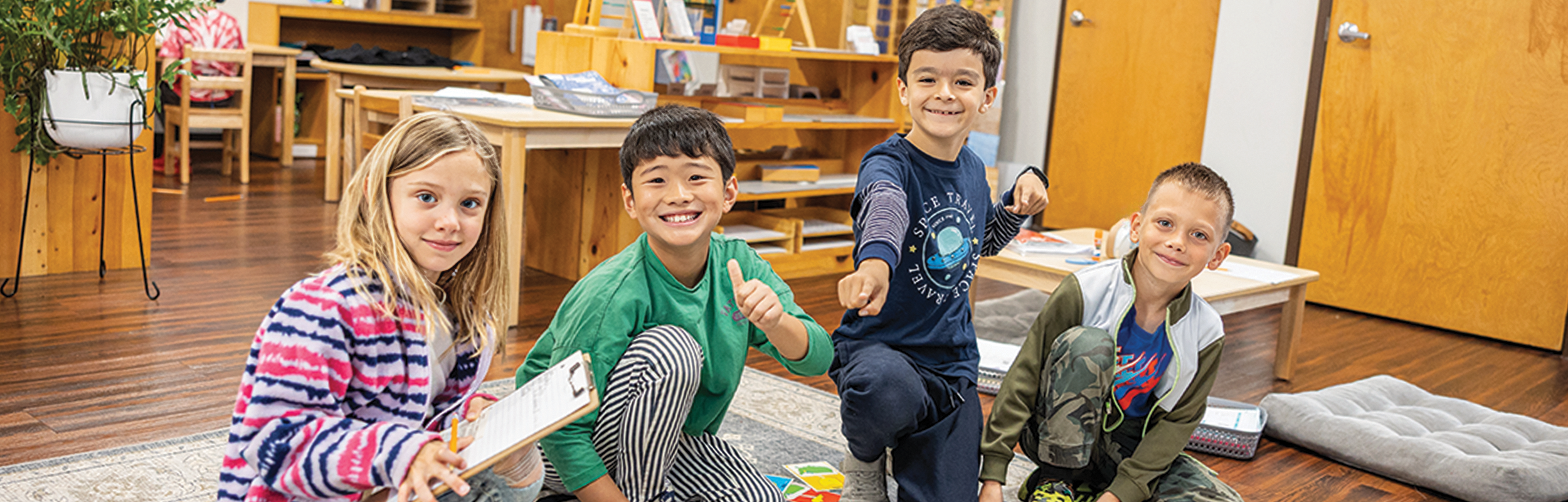
At the Elementary level (Grades 1–6), children begin to look beyond themselves and into the wider world. They are full of questions—why, how, where, when, and who?—and seek deeper connections between ideas, people, and cultures. At Montessori Academy of North Hoffman, we create a learning environment that nurtures this expanding worldview while continuing to support each child’s emotional and academic growth.
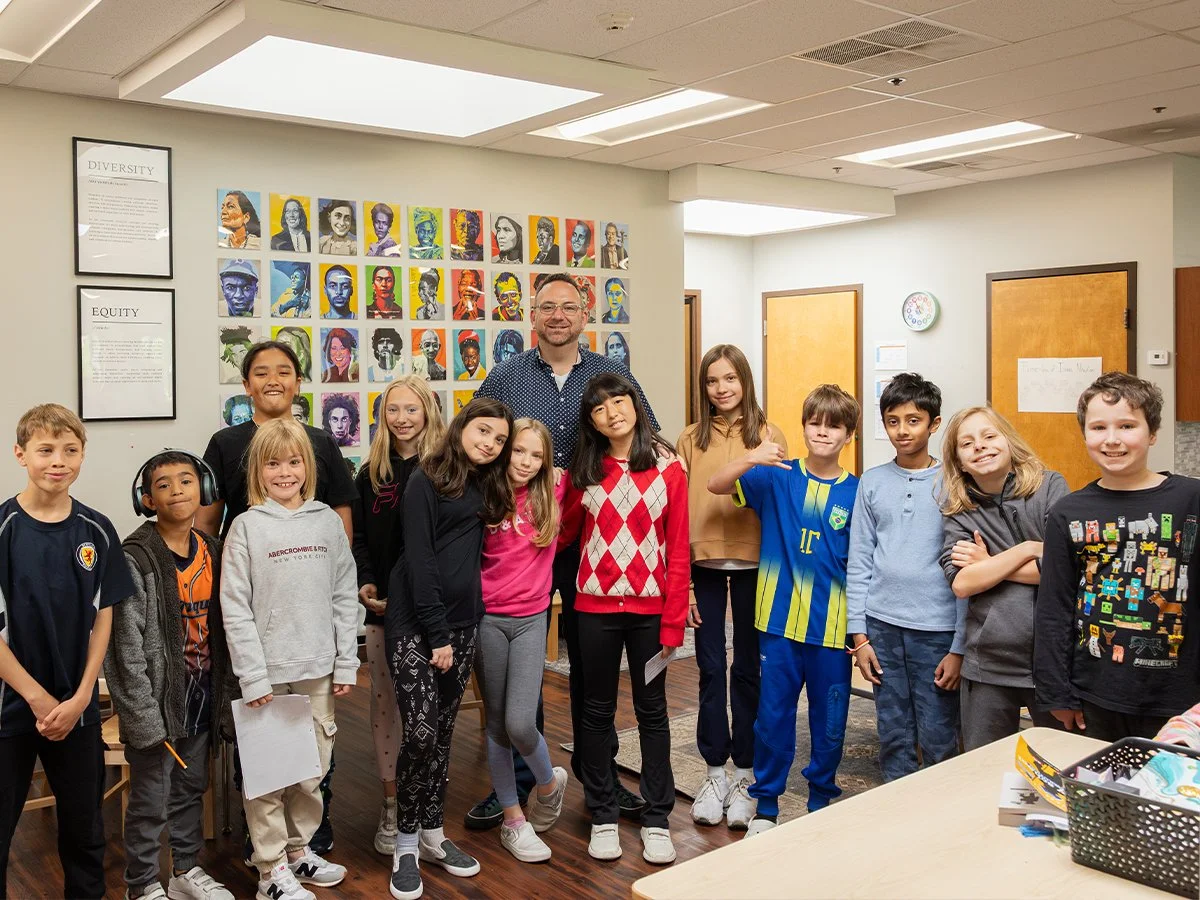
Students in our two Elementary classrooms work in multi-age groups, forming strong communities of learners. These settings foster collaboration, leadership, and a deep respect for one another’s ideas and efforts. With the guidance of Montessori-certified educators and skilled assistants, students are empowered to explore, question, and contribute meaningfully—both in and beyond the classroom.
Growth and Development
Elementary-aged children are in what Maria Montessori called the Second Plane of Development—a stage marked by imagination, moral exploration, and a thirst for understanding how the world works. Our Elementary program meets these developmental needs through meaningful work, rich cultural studies, and opportunities for independence and social collaboration.
How We Nurture Key Areas of Development
🔤 Mastery of Language and Communication
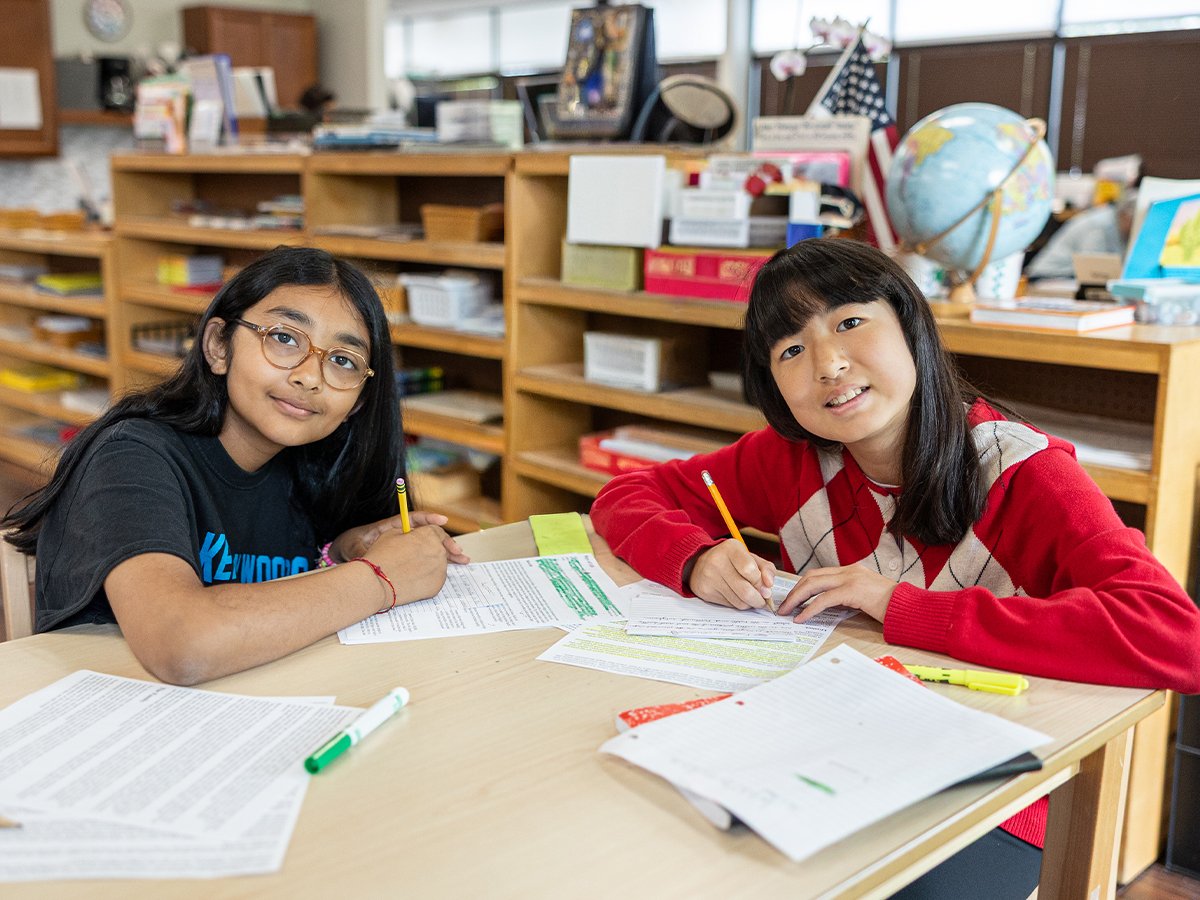
Students engage in daily reading, writing, vocabulary, spelling, grammar, and sentence analysis using both Montessori materials and research-based tools.
They write across genres—stories, reports, letters, and essays—and share their ideas through class discussions and oral presentations.
Independent research projects allow students to explore areas of personal interest, building literacy and public speaking skills over time.
➗ Advanced Math and Critical Thinking
Hands-on Montessori materials help children visualize and internalize math concepts—from arithmetic to fractions, geometry, and algebraic thinking.
Students progress from concrete work to abstract problem-solving as they’re ready, developing fluency with operations, number sense, and reasoning.
Geometry is integrated into daily work, using visual models to explore shapes, angles, and measurement.
🧠 Concentration and Responsibility
Students are responsible for managing their own time and work plans, developing organizational skills and personal accountability.
The uninterrupted work cycle allows them to engage in long, focused sessions of exploration, research, and collaboration.
Practical life extensions—like classroom care, meal prep, and field trip planning—build real-world executive functioning.
🌍 Cultural Knowledge and Global Awareness
Through geography, history, science, and anthropology, children explore human cultures and the natural world.
The Great Lessons—a series of impressionistic stories that introduce big ideas—spark curiosity about the universe, life on Earth, human society, language, and mathematics.
These interconnected studies inspire months of rich inquiry, projects, and reflection that connect past to present and spark a sense of place in the world.
💛 Moral Development and Social Understanding
Children explore concepts of fairness, justice, and ethics through class dialogue, community responsibilities, and lessons in virtues.
Mixed-age classrooms encourage collaboration, mentoring, and conflict resolution in natural ways.
Students participate in class meetings and group decisions, building empathy and a sense of shared responsibility.
🔍 Independent Research and Self-Expression
Students pursue self-chosen topics, conduct in-depth research, and share their findings with peers and parents.
Each year, students present projects at “Presentation Nights” using written reports, visuals, and oral presentations.
This cycle of inquiry, creativity, and public speaking builds confidence and personal voice.
Prepared Classroom Environments
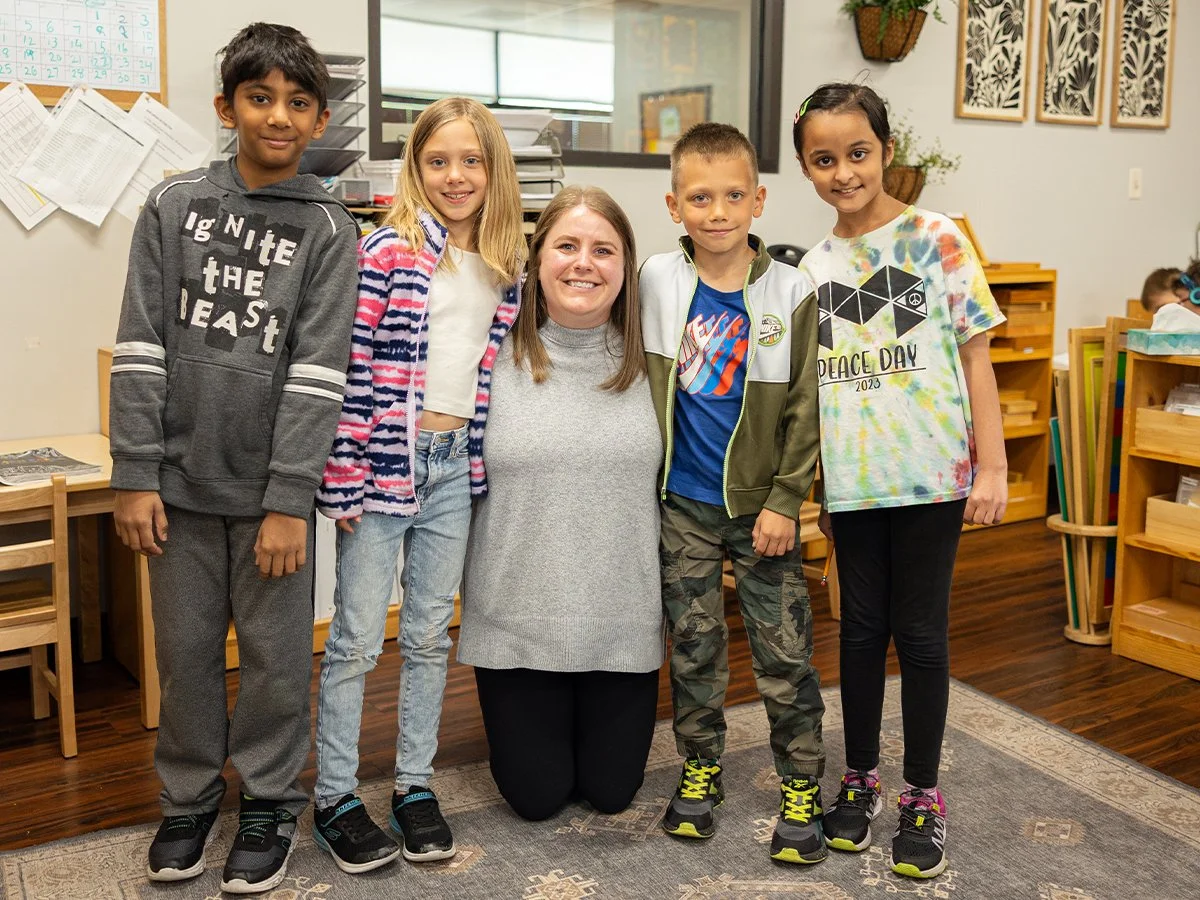
Our Elementary classrooms are vibrant, spacious environments where children are free to move, collaborate, and engage deeply with their work. Materials are beautifully organized and accessible, encouraging students to take initiative and follow their curiosity.
Each space is equipped with a wide range of Montessori materials across core subjects—language, math, geometry, science, geography, and history—as well as cultural studies, music, art, and practical life activities. Students care for the space themselves, creating a shared sense of ownership and community pride.
Work Periods and Rhythms
Children in our Elementary program benefit from long, uninterrupted work periods where they can dive deep into projects, follow questions as far as they want, and collaborate with peers. Rather than working on the same task at the same time, each child follows an individualized work plan guided by their teacher.
Daily rhythms include time for movement, enrichment, classroom responsibilities, and outdoor play. Students also participate in meal preparation, gardening, and real-world practical experiences that support independence and meaningful contribution.
Montessori-Trained Educators
Our Elementary guides are certified in Montessori pedagogy and specialize in meeting the unique needs of children in the second plane of development. Teachers present key lessons, observe closely, and provide gentle guidance and encouragement as students pursue academic and personal growth.
Small-group and one-on-one lessons are tailored to each student’s readiness and interests. Our educators model curiosity, kindness, and responsibility, helping students to grow not only in knowledge but in character.
Beyond the Classroom
Elementary students regularly extend their learning into the world around them. Field trips are planned based on classroom work and student interests, and may include small group explorations or full-class adventures.
Examples include:
• Annual three-to-five-day overnight nature trips.
• A triennial living history experience at Ancient Lifeways in Michael, Illinois.
• Visits to Springfield to explore state government and civic life.
Students also participate in physical education, art, music, Spanish, and Japanese. Practical life takes on new dimensions: older students prepare class meals, care for the classroom, and help plan events—building leadership and independence in real-world ways.
Home Partnership
We value parents as partners in the Elementary journey. Communication is ongoing through conferences, updates, and opportunities to observe and celebrate student work. We support parents in understanding the Montessori approach and helping children carry their independence and curiosity into the home.
We also prepare students for life beyond Montessori by teaching test-taking strategies and administering standardized tests annually—ensuring that when children transition to another educational environment, they do so with confidence and competence.
The Montessori Difference
The Montessori Elementary experience is vastly different from traditional models. Instead of lectures and textbooks, students explore subjects through hands-on materials, stories, and independent discovery. Instead of desks in rows, classrooms are buzzing with focused movement, collaboration, and joyful inquiry.
Key Distinctives:
• Interdisciplinary learning sparked by the Great Lessons.
• Student-driven research and presentations.
• Individualized work plans rather than one-size-fits-all curriculum.
• Emphasis on moral development and community-building.
• Real-life applications through field work and practical tasks.
Montessori Elementary nurtures children to become thoughtful, independent learners who know how to ask big questions, follow through on their curiosity, and contribute meaningfully to the world around them.