
The Montessori Difference
What Is Montessori Education?
Maria Montessori was an Italian physician and educator who developed a revolutionary approach to learning—one based on careful observation of how children naturally grow, explore, and thrive. Her method, now known around the world as Montessori education, continues to offer children a joyful, meaningful foundation for lifelong learning.
Montessori’s child-centered approach nurtures each child’s natural desire to learn. Instead of following a one-size-fits-all curriculum, Montessori classrooms are thoughtfully designed to support:
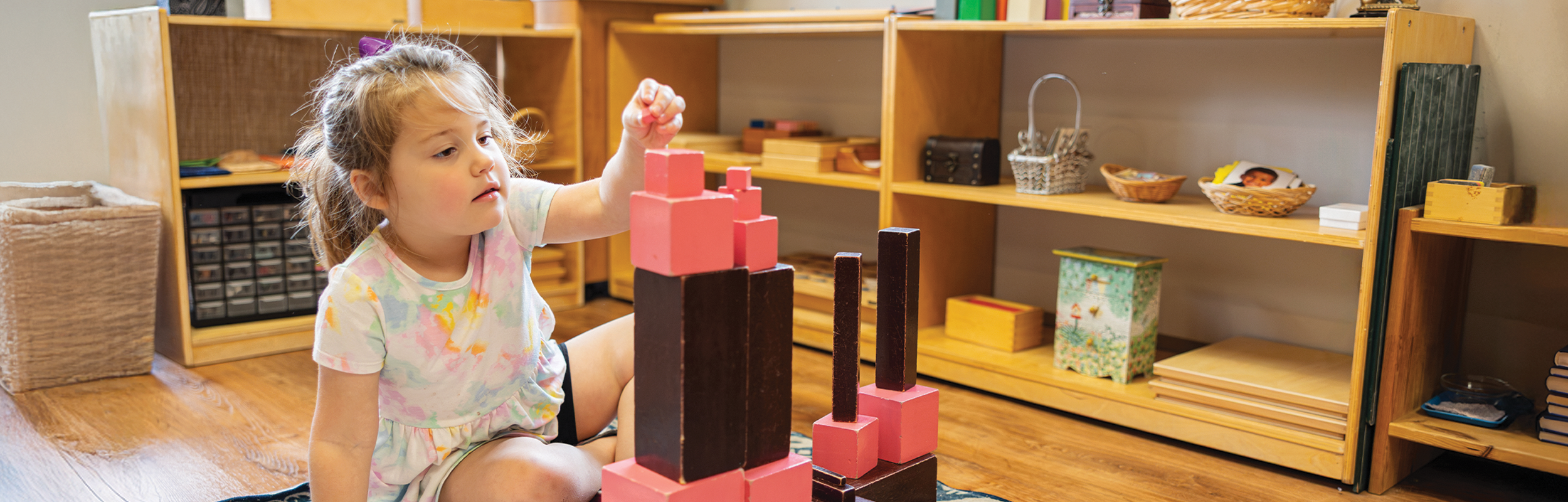
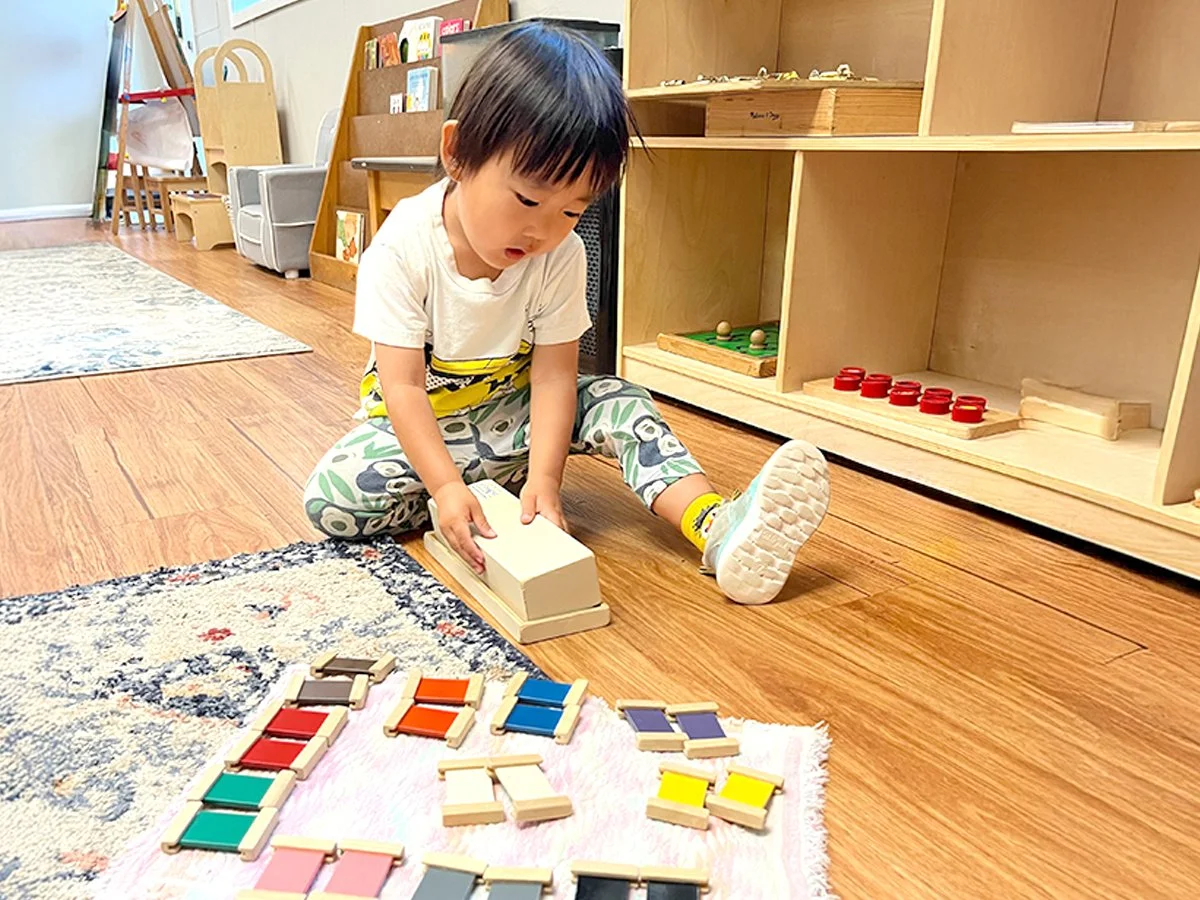
Active, hands-on exploration – children engage with thoughtfully designed materials to build, experiment, and explore abstract concepts in concrete, meaningful ways.
Independence – children are encouraged to make purposeful choices, learning to take responsibility for their own work and actions.
Concentration and meaningful work – children are given the time and space to focus deeply on tasks that match their interests and developmental stage. This often leads to a sense of flow—a calm, focused state where learning feels natural and rewarding.
Respect for self, others, and the environment – classrooms foster a spirit of kindness, collaboration and support, and care for one another and the world around them.
Children are free to choose from a variety of activities, moving at their own pace with guidance from trained Montessori teachers. The goal is to support the development of the whole child—academically, socially, emotionally, and physically.
Montessori education is a neurodevelopmental approach that recognizes children as the key drivers of their own development. Just as they learn to walk and talk through natural curiosity and repetition, they also have an inner drive to explore and learn. This process—called self-construction—means that with the right environment and support, children naturally build the skills and understanding they need to grow into confident, capable individuals.
“The goal of education should be to activate the child’s own natural desire to learn.” —Maria Montessori
How Montessori Education is Different
PERSONALIZED LEARNING
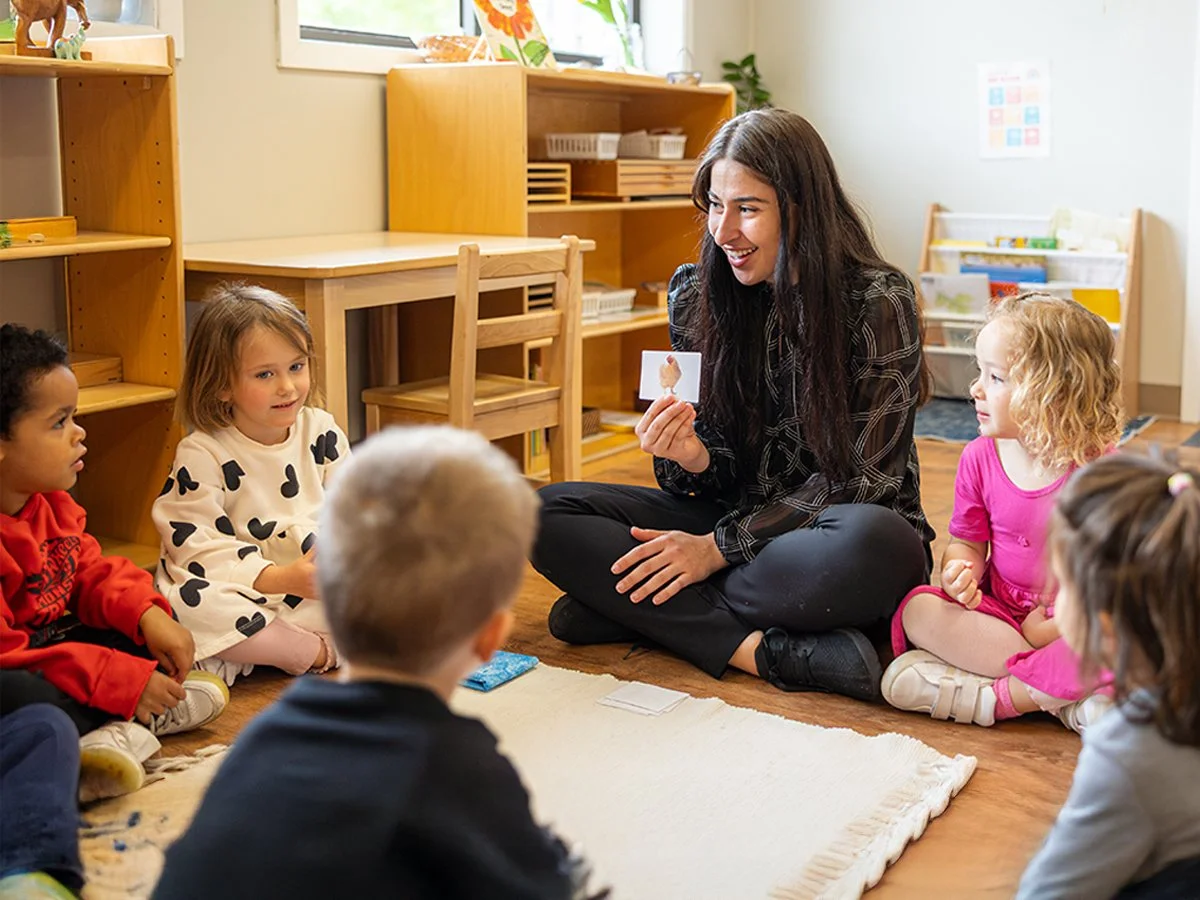
Montessori education stands apart in the way it honors each child as a unique individual. Rather than having all students follow the same lesson at the same time, Montessori classrooms are designed to support each child’s natural curiosity and rhythm of learning through:
Individual and small group lessons – allowing teachers to tailor guidance to each child.
Self-directed learning – children choose meaningful work based on their interests and developmental needs.
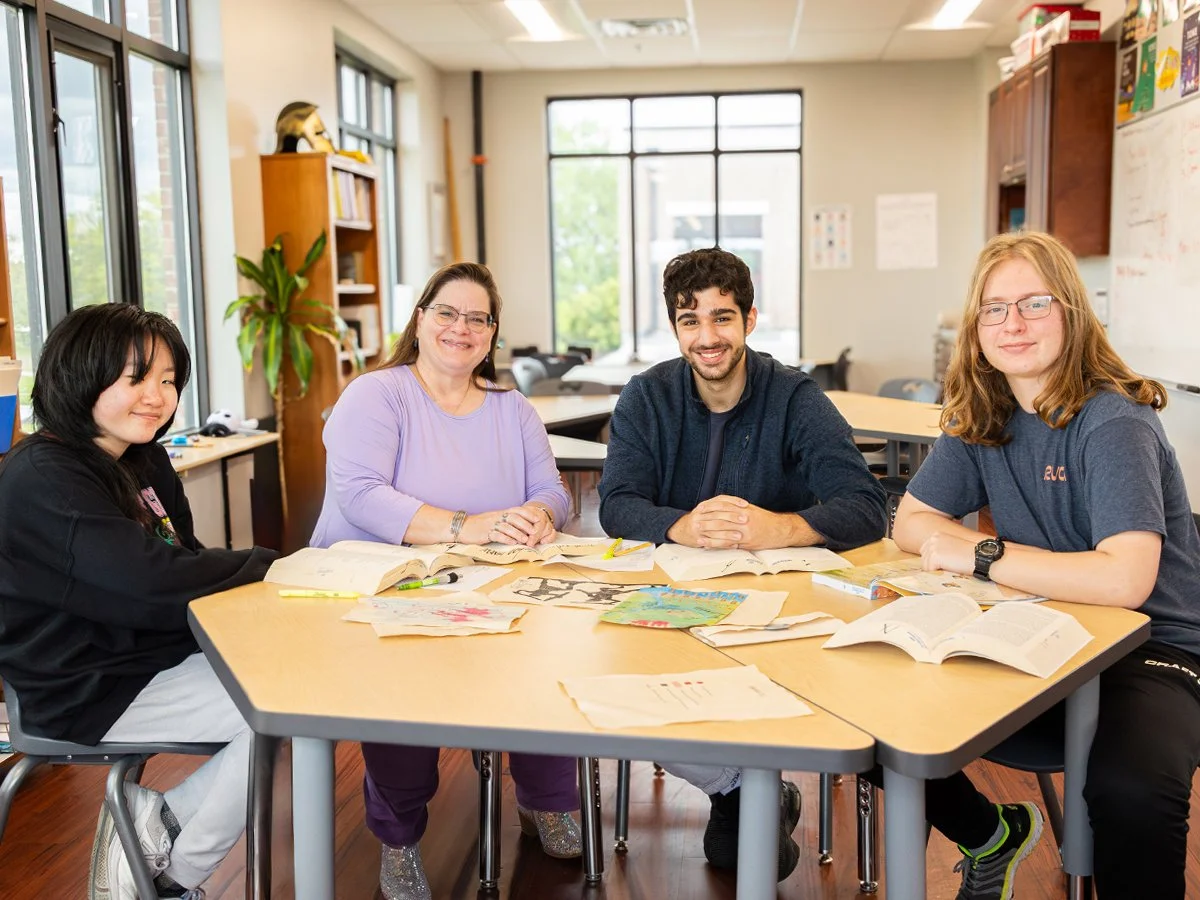
Mixed-age classrooms – encouraging collaboration, leadership, and peer learning.
Hands-on materials – beautifully crafted tools that turn abstract ideas into concrete understanding (For example, building math skills with bead chains or learning grammar through colorful symbols).
This approach encourages deep, lasting understanding—not just surface-level memorization. Beginning in the elementary years, students begin practicing executive functioning skills of planning, organizing and breaking down assignments using accountability tools and planners. Over time children gain confidence as they discover that learning is something they can do for themselves and enjoy for a lifetime.
“Education is a natural process carried out by the child and is not acquired by listening to words but by experiences in the environment.” —Maria Montessori, The Absorbent Mind
CARING COMMUNITY THROUGH MUTUAL RESPECT
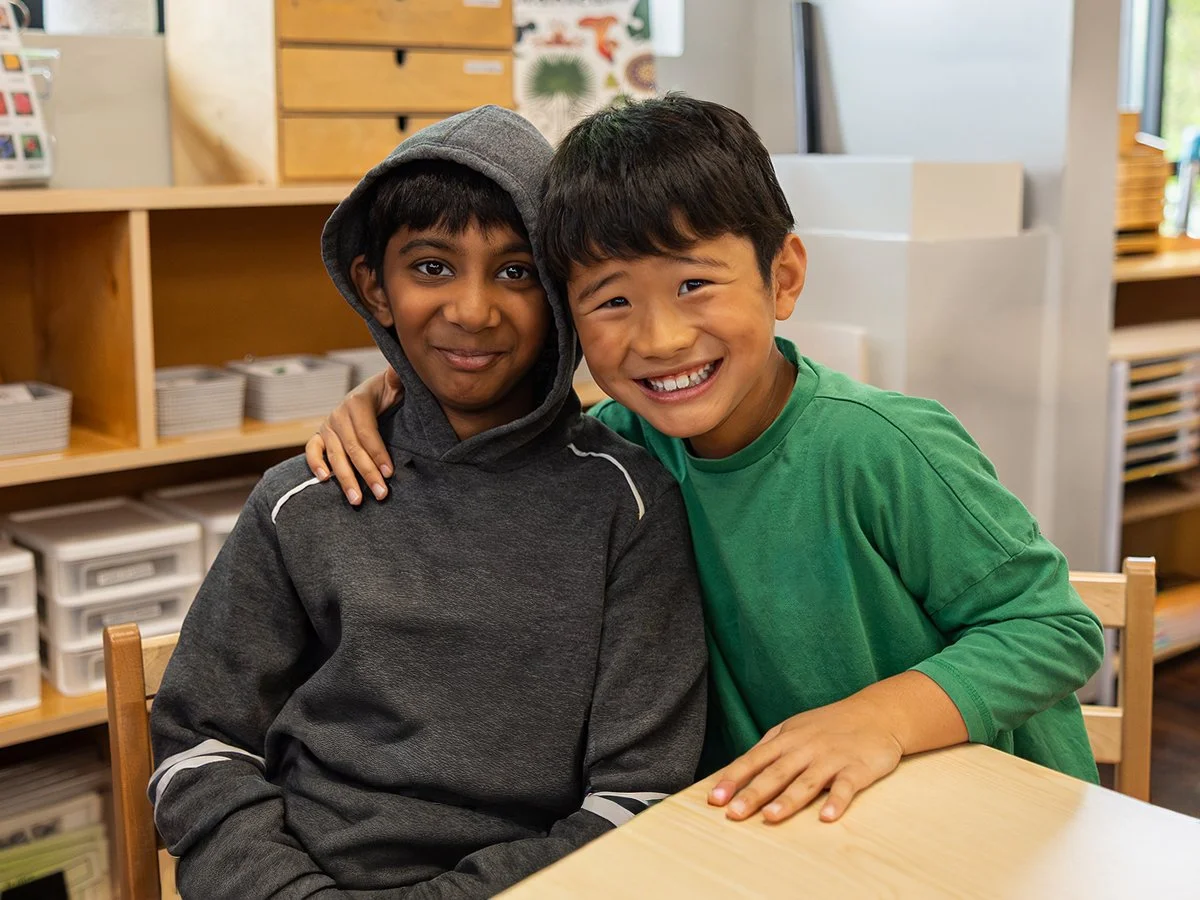
Montessori education is about more than academics—it’s about helping children grow into capable, caring individuals. Children learn essential life skills such as:
Respect for themselves – practicing independence in daily routines.
Respect for their environment – contributing to the upkeep and beauty of their classroom. This highlights the symbiosis of the class community where all members contribute to the whole.
Respect for others – developing empathy, cooperation, and kindness through real social interactions.
In a Montessori classroom, children gain more than knowledge—they build self-confidence, inner discipline, and a deep respect for the world around them. It’s not just an education—it’s preparation for life.
“The child is both a hope and a promise for mankind.” —Maria Montessori, Education and Peace

Comparing Approaches

About Maria Montessori
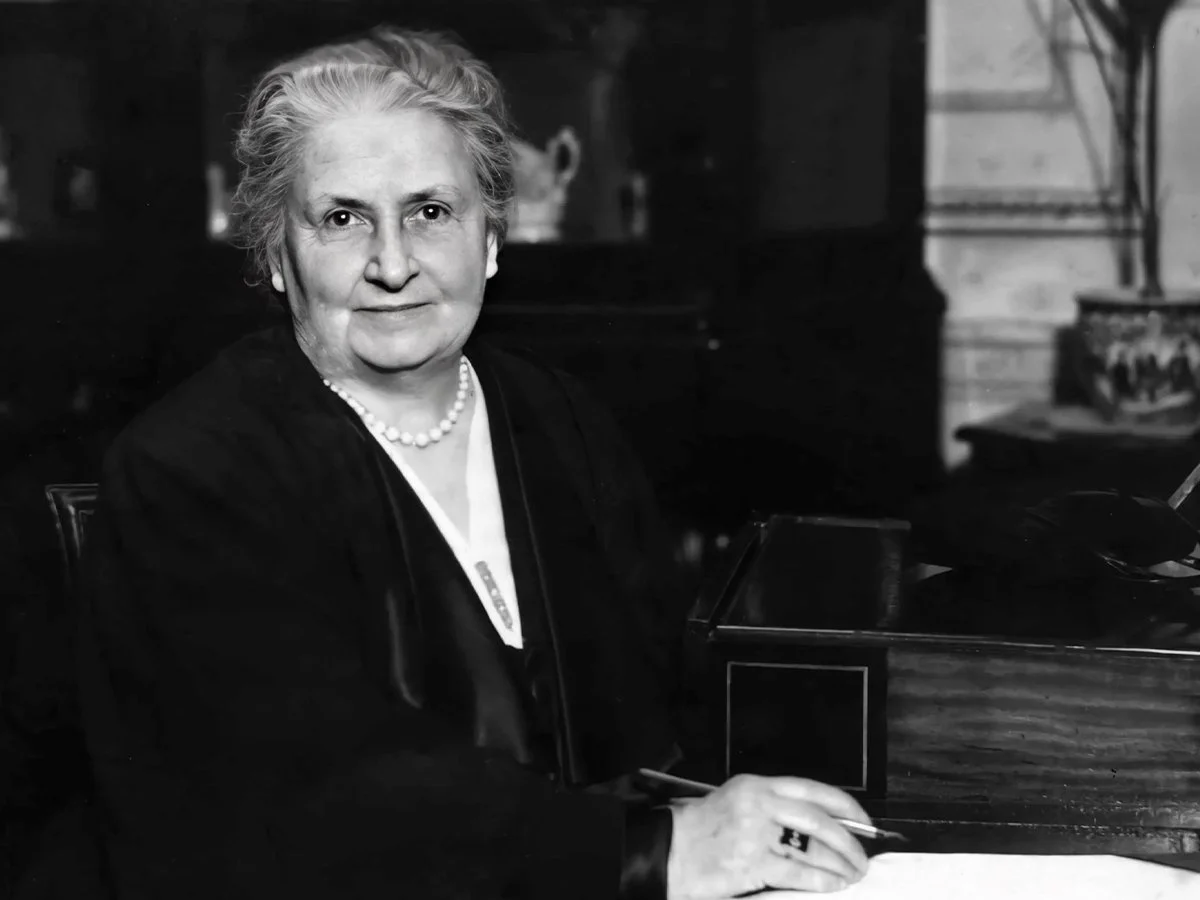
Maria Montessori was the first female physician in Italy and a true pioneer in education and child development. Her background in medicine, psychology, and anthropology gave her a unique perspective on how children grow and learn. Rather than imposing a rigid system, she carefully observed children in various settings and discovered that they flourished when given the freedom to explore, move, and choose meaningful work.
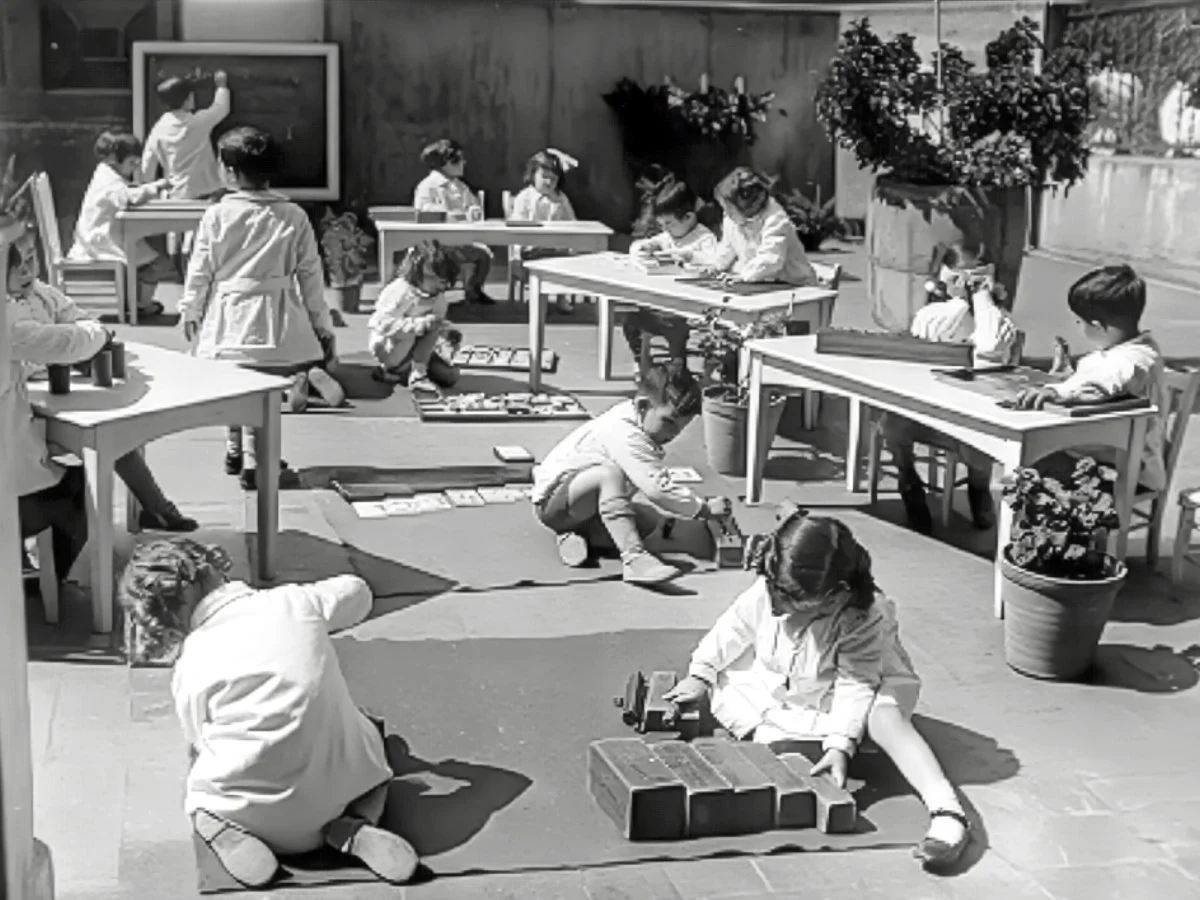
In 1907, she opened her first classroom, the Casa dei Bambini (Children’s House), in a low-income district of Rome. Working with children who had no prior schooling, she introduced hands-on materials and created a prepared environment that encouraged independence, concentration, and care for the surroundings. The remarkable transformation she witnessed—children becoming calm, focused, and joyful learners—inspired what would become the Montessori method.
Her philosophy quickly gained international recognition and has since been embraced by educators across cultures and continents. Today, her legacy lives on in Montessori schools around the world, where children continue to learn with joy, purpose, and a strong sense of self.
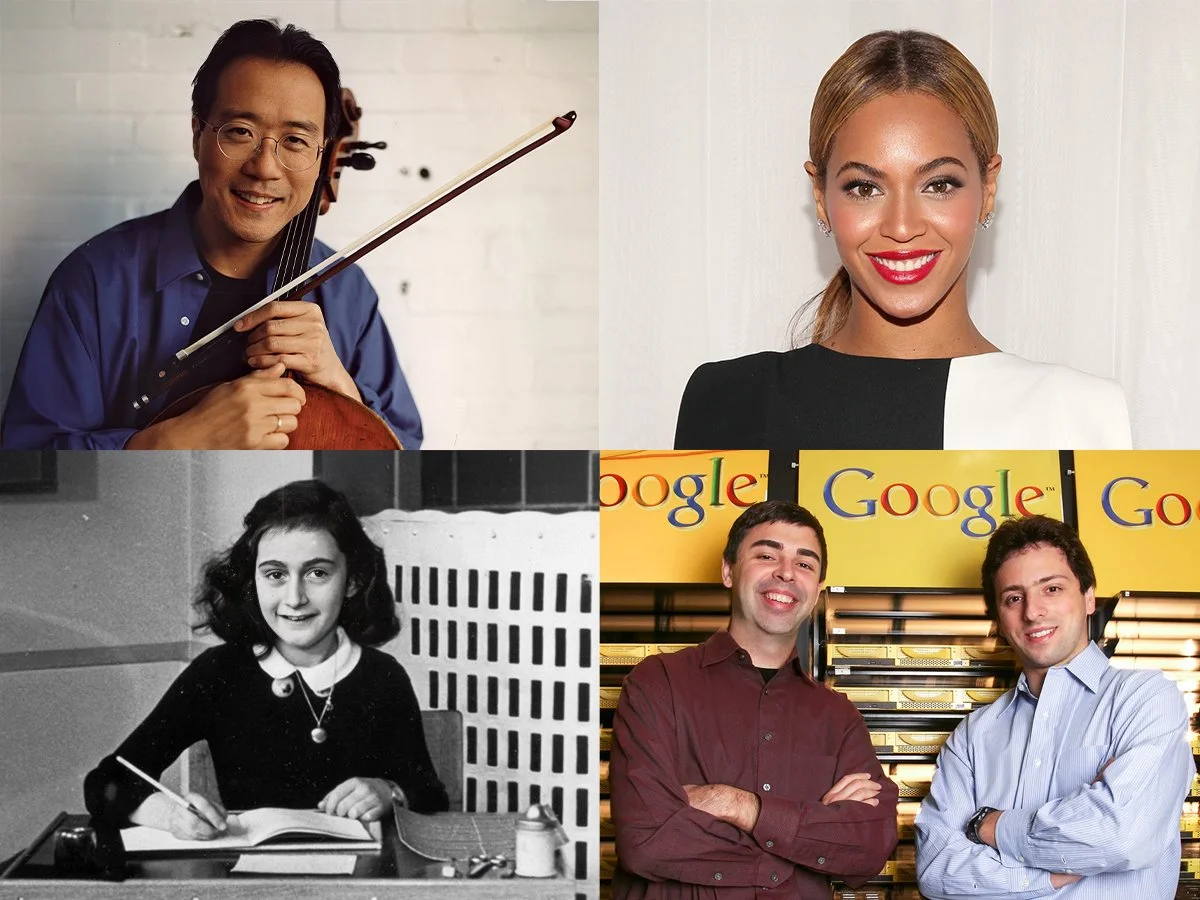
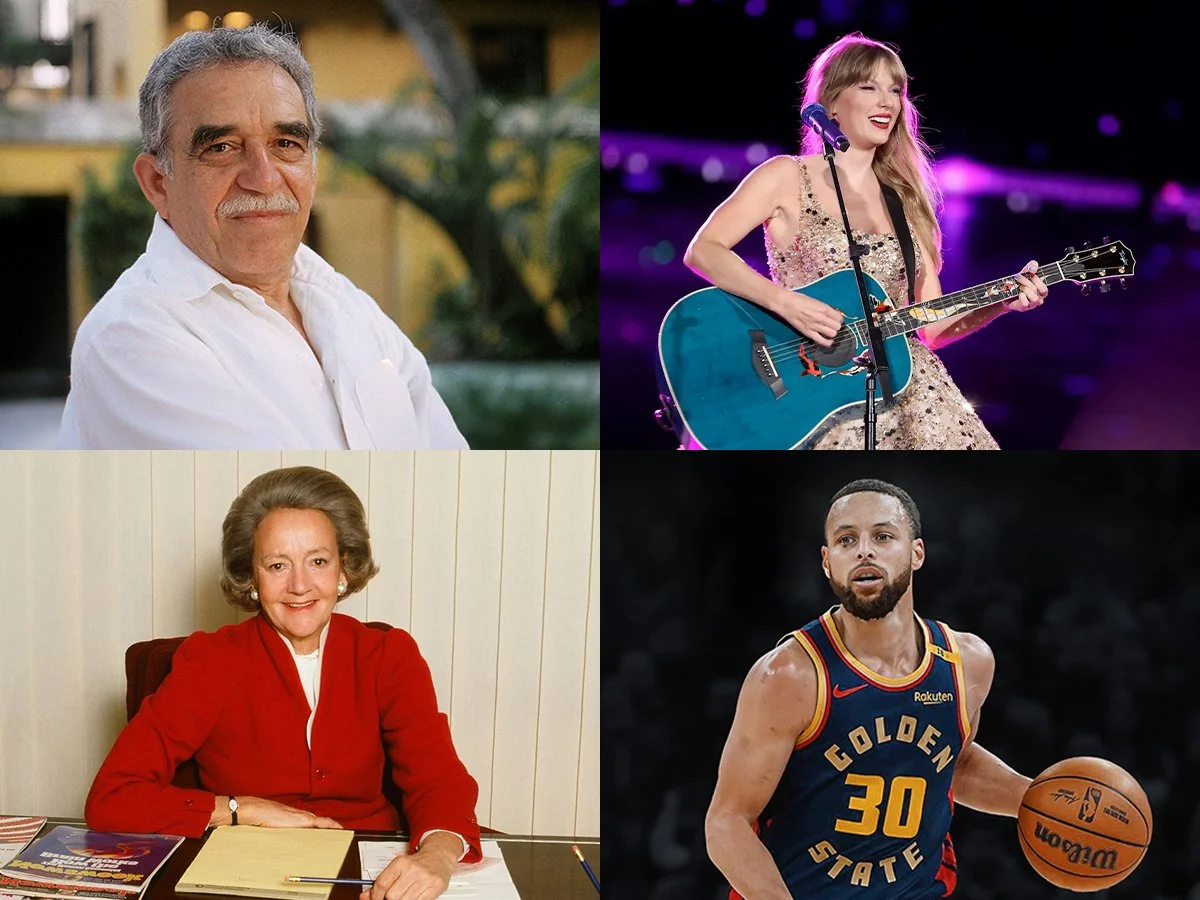
A Foundation for Creativity & Innovation
Here’s some of the accomplished individuals who were Montessori-educated, many of whom have credited their early learning experiences as foundational to their creativity, independence, and love of learning:
Arts & Entertainment
Taylor Swift
Grammy-winning singer-songwriter
Beyoncé Knowles
Singer, songwriter, actress, fashion designer, Grammy winner
Helen Hunt
Academy Award-winning actress
George Clooney
Actor, director, and producer
Joshua Bell
Renowned violinist
Dakota Fanning
Actress
Steph Curry
NBA All-Time Three Point Leader
Yo Yo Ma
Internationally renowned cellist, U.N. Peace Ambassador
Public Service, Media, & Business
Anne Frank
Diarist and Holocaust victim
Gabriel García Márquez
Nobel Prize-winning author
Prince William & Prince Harry
British Royal Family
Jimmy Wales
Founder of Wikipedia
Larry Page & Sergey Brin
Founders of Google
Jeff Bezos
Founder of Amazon
Peter Drucker
Reknown management consultant
Will Wright
Video game pioneer & creator of SimCity
Katharine Graham
Former owner and editor of The Washington Post