
Pre-School & Kindergarten
(Primary)
Caring Community
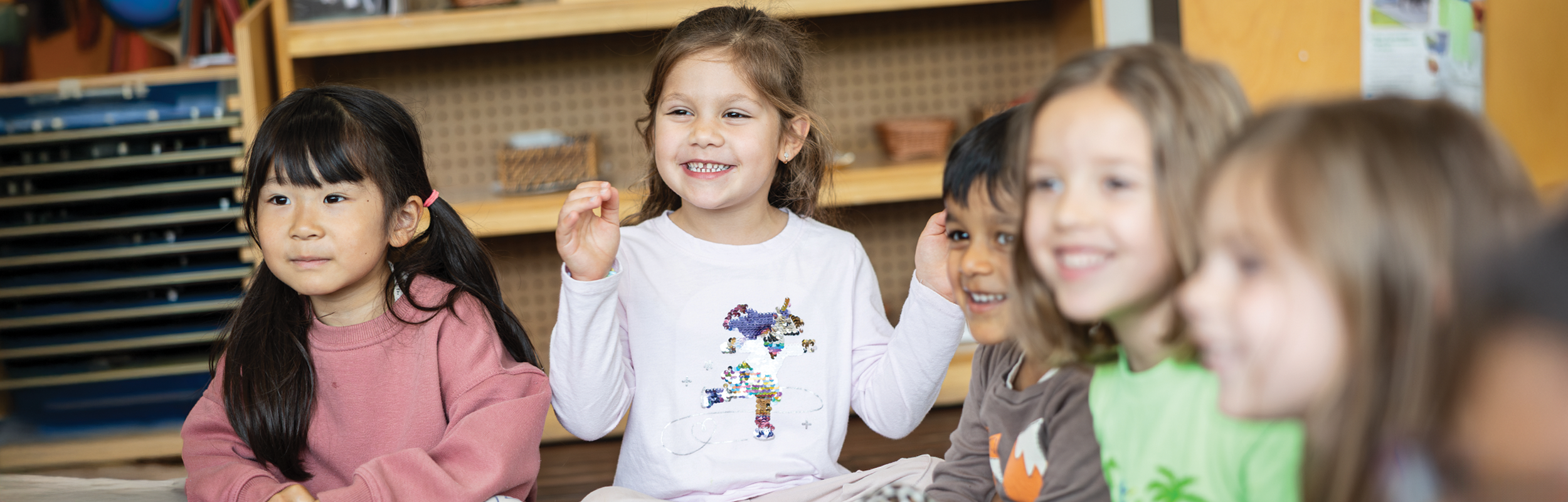
Our Primary Program for children ages 3 to 6 is where curiosity, independence, and joyful learning come to life. At this stage, children are bursting with questions, eager to explore, and deeply motivated to do things for themselves. In our Montessori classrooms, children are given the time, tools, and freedom to grow—not only academically, but socially and emotionally as well.
This mixed-age environment becomes a small, supportive community. Younger children look up to older peers as role models, while older children develop leadership and empathy as they guide others. It’s a place of respect, purpose, and belonging—where children feel safe to take intellectual and personal risks.
Growth and Development
Montessori believed that the years from 3 to 6 are a sensitive period—a time when children are especially open to developing foundational skills for life. In the Primary classroom, we nurture these abilities through intentional materials, individualized lessons, and uninterrupted work periods.
How We Nurture Key Areas of Development
💬 Language and Early Literacy
Children explore language through a rich mix of spoken conversation, vocabulary development, storytelling, phonics, writing, and reading.
Montessori materials like sandpaper letters and the moveable alphabet allow children to feel, see, and build language in a multisensory way.
Children are invited to write and read as soon as they show interest, allowing these skills to develop naturally and joyfully.
➗ Mathematical Understanding
Montessori math materials like number rods, spindle boxes, golden beads, and decimal systems present abstract concepts through hands-on experience.
Children develop number sense, place value, addition, subtraction, and even early multiplication and division through concrete manipulation before moving to abstraction.
Because each child progresses at their own pace, they develop true mastery—not just memorization.
🧩 Concentration and Persistence
The uninterrupted work cycle encourages deep focus and task completion. Children choose their work, return to it over multiple days if needed, and develop inner discipline.
Repetition is welcomed, and children are encouraged to revisit tasks to refine their understanding and build resilience.
Educators protect the child’s concentration by avoiding unnecessary interruptions and trusting them to engage meaningfully.
🪞 Independence and Responsibility
Children learn to care for themselves (dressing, preparing snacks, cleaning up) and their environment (watering plants, tidying materials, helping peers).
Classrooms are designed for independence, with child-sized furniture and accessible materials that foster autonomy.
As children grow in confidence, they take increasing responsibility for their work and their role in the classroom community.
🌍 Cultural Awareness
Through geography, history, science, and global cultures, children are introduced to the wonder and diversity of the world.
Primary’s cultural studies lay the groundwork for the Cosmic Education children encounter in Elementary, giving children a sense of how everything in the universe is interconnected.
Map puzzles, landform trays, timelines, and nature exploration all bring these concepts to life.
💛 Emotional Growth and Social Development
Children learn peaceful conflict resolution, empathy, and collaboration through daily social interactions and guided “grace and courtesy” lessons.
Mixed-age classrooms provide natural opportunities for mentoring, sharing, and leadership.
The calm, respectful tone of the classroom helps children regulate emotions and engage with others respectfully.
Prepared Classroom Environments
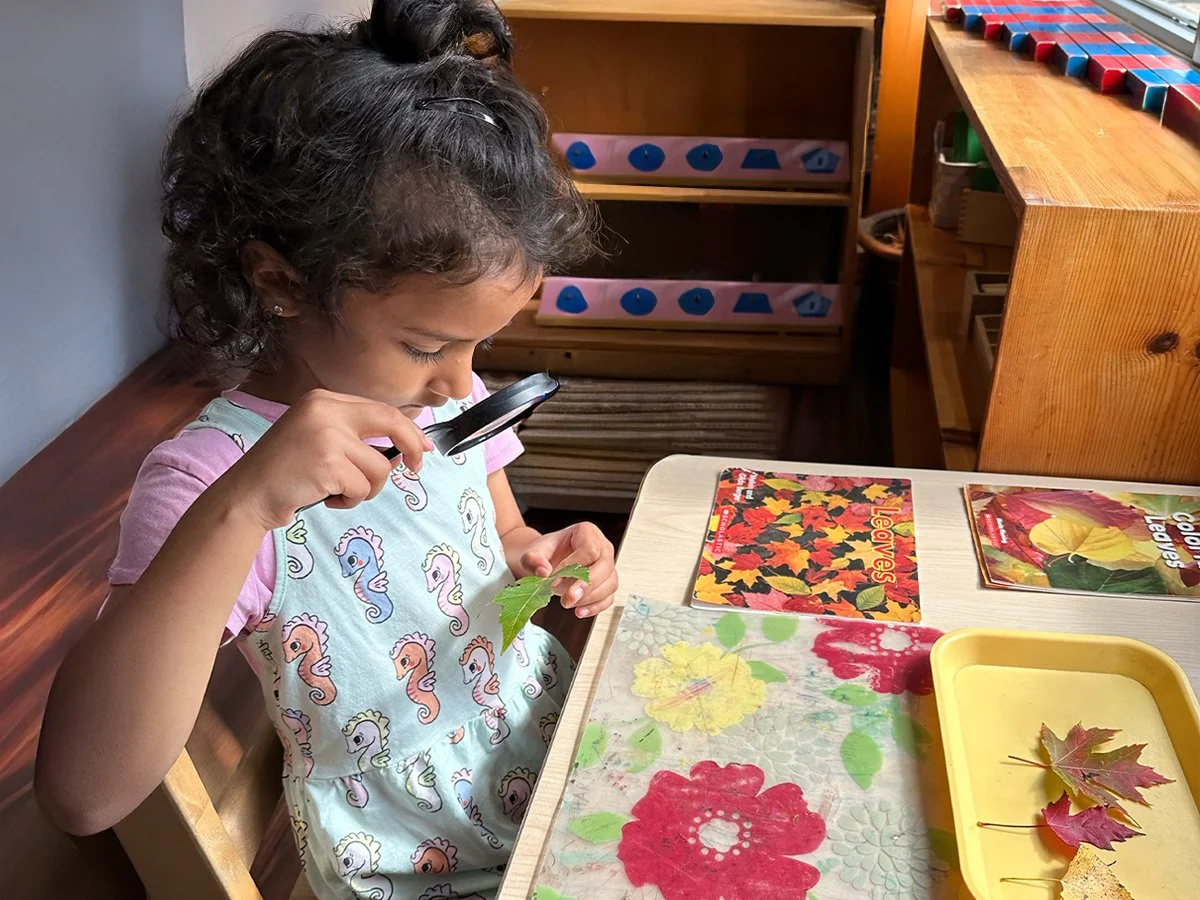
Primary classrooms are thoughtfully prepared to promote exploration, movement, and deep engagement. Materials are arranged in logical sequence on open shelves, inviting children to independently choose meaningful work in areas such as:
Practical Life
Sensorial Exploration
Language
Mathematics
Science
Geography and Culture
Art and Creativity
Each material is designed to isolate a single concept, allowing children to develop mastery through hands-on interaction. The environment encourages both freedom and responsibility—and gives children a deep sense of order, beauty, and purpose.
Work Periods and Rhythms
Children in the Primary program benefit from long, uninterrupted work periods—typically two to three hours—where they can explore their interests without rushing. This work cycle is essential to developing concentration, independence, and intrinsic motivation.
Daily rhythms also include outdoor play, group time (stories, songs, and discussions), lunch, and practical life tasks. While the routine offers predictability, the child’s experience within it is full of choice, movement, and meaningful work.
Montessori-Trained Educators
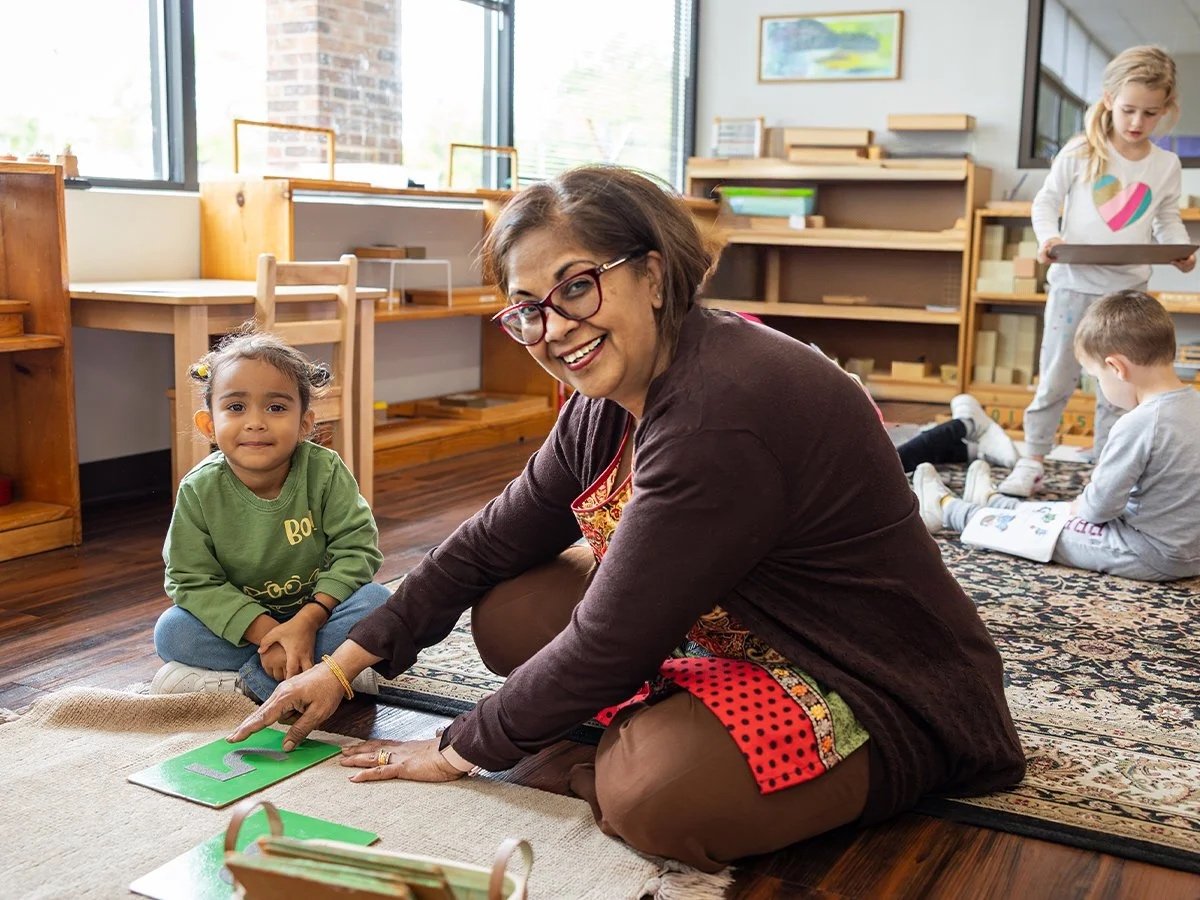
Our Montessori Primary guides are trained to observe each child carefully and present lessons at just the right moment of readiness. Lessons are often one-on-one or in small groups, tailored to the child’s pace and interests.
Educators gently step back to allow for independent work, yet remain close enough to offer support, encouragement, and new challenges. This balance helps children gain both competence and confidence in their own abilities.
Beyond the Classroom
While much of the magic happens inside the classroom, children also enjoy time outdoors every day. Nature walks, movement games, and time in our play spaces allow them to build physical strength, coordination, and imagination.
Creative expression through music, movement, and art is integrated into the daily experience, enriching the whole child and offering balance to cognitive development.
Home Partnership
Parents are a vital part of the Primary journey. We work closely with families to share insights, progress, and suggestions for supporting independence and curiosity at home. Regular updates, conferences, and invitations to observe the classroom help create a strong sense of shared purpose.Together, we build a consistent foundation between home and school—supporting each child’s growth with care and intention.
The Montessori Difference
In the Montessori Primary classroom, children are not passive recipients of knowledge—they are active participants in their own learning. Here’s how our program differs from traditional preschool or kindergarten:
• Children choose their own work and progress at their own pace.
• Hands-on materials make abstract concepts concrete and understandable.
• Mixed-age classrooms promote leadership, collaboration, and mentorship.
• Educators guide rather than instruct, fostering independence and self-motivation.
• Social-emotional learning is integrated into daily life, not treated as a separate subject.
This approach develops confident, compassionate, and curious learners—well-prepared for the next stage of their academic and personal journey.