


Caring Community
At the Montessori Academy of North Hoffman, our Infant Program for children 3 months to 15 months old provides a peaceful, loving environment where babies feel safe, respected, and deeply cared for. From day one, we prioritize emotional security and trust—because we know that feeling safe is the foundation for all future learning. Within our calm and home-like spaces, infants are nurtured by responsive adults who meet their individual needs with warmth and attentiveness.
Growth and Development
In these earliest months of life, children experience rapid growth in motor skills, communication, sensory awareness, and emotional understanding. We support each baby’s natural development through gentle observation and responsive care.
How We Nurture Key Areas of Development
🧡 Basic Trust and Emotional Security
We respond promptly and warmly to each infant’s cues, building trust through consistent, loving care.
Infants are cared for by familiar adults who speak gently, make eye contact, and offer physical closeness through rocking, holding, and soothing.
Predictable routines help babies feel safe and confident in their surroundings.
🧠 Gross and Fine Motor Skills
Our classrooms provide safe, open floor space for tummy time, crawling, reaching, and exploring freely.
Low furniture and soft mats encourage movement, balance, and strength building.
Simple, graspable materials like rings, rattles, and stacking toys support fine motor control and hand-eye coordination.
Infants are never placed in restrictive equipment (like bouncers or walkers), giving them the freedom to develop movement naturally.
🗣️ Language and Communication
Caregivers engage in constant conversation with the infants—narrating activities, naming emotions, and describing the world around them.
We read books, sing songs, and play simple language games to promote listening and vocabulary development.
Infants are encouraged to express themselves through gestures, sounds, and facial expressions—and we respond with attentiveness, modeling respectful communication.
🌱 Independence in Care Routines
Even from a young age, infants are invited to participate in their own care—such as reaching for a bottle, wiping their face, or choosing between two bibs.
We use slow, intentional movements and clear language during care routines so the infant knows what to expect and can engage actively.
When developmentally ready, we support self-feeding with child-sized utensils and real (non-plastic) dishware.
🧩 Curiosity and Focus Through Sensory Exploration
A rich variety of sensory materials are available at eye level—offering different textures, sounds, weights, and visual interest.
We introduce one material at a time to avoid overstimulation and support deep concentration.
Infants are free to explore at their own pace without interruption or redirection, allowing natural focus to emerge.
Prepared Classroom Environments
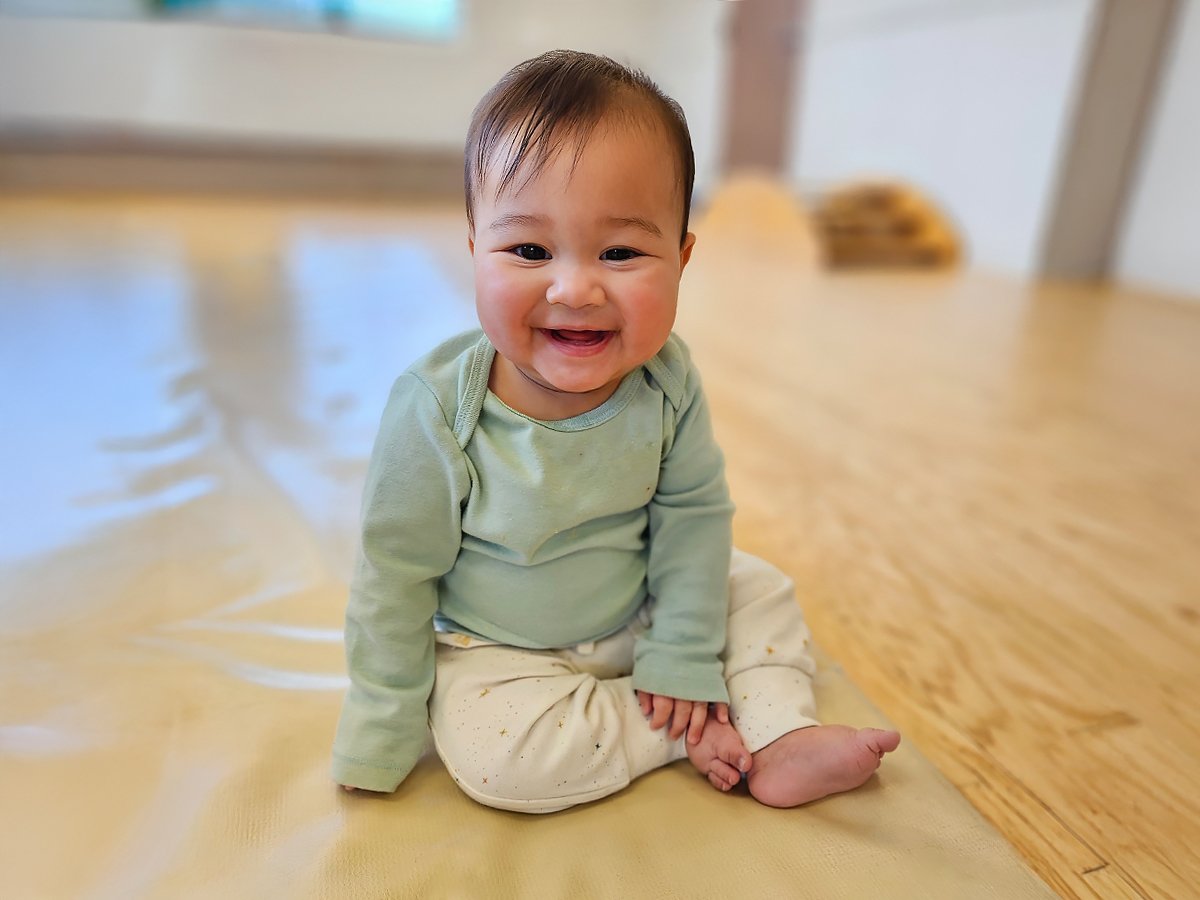
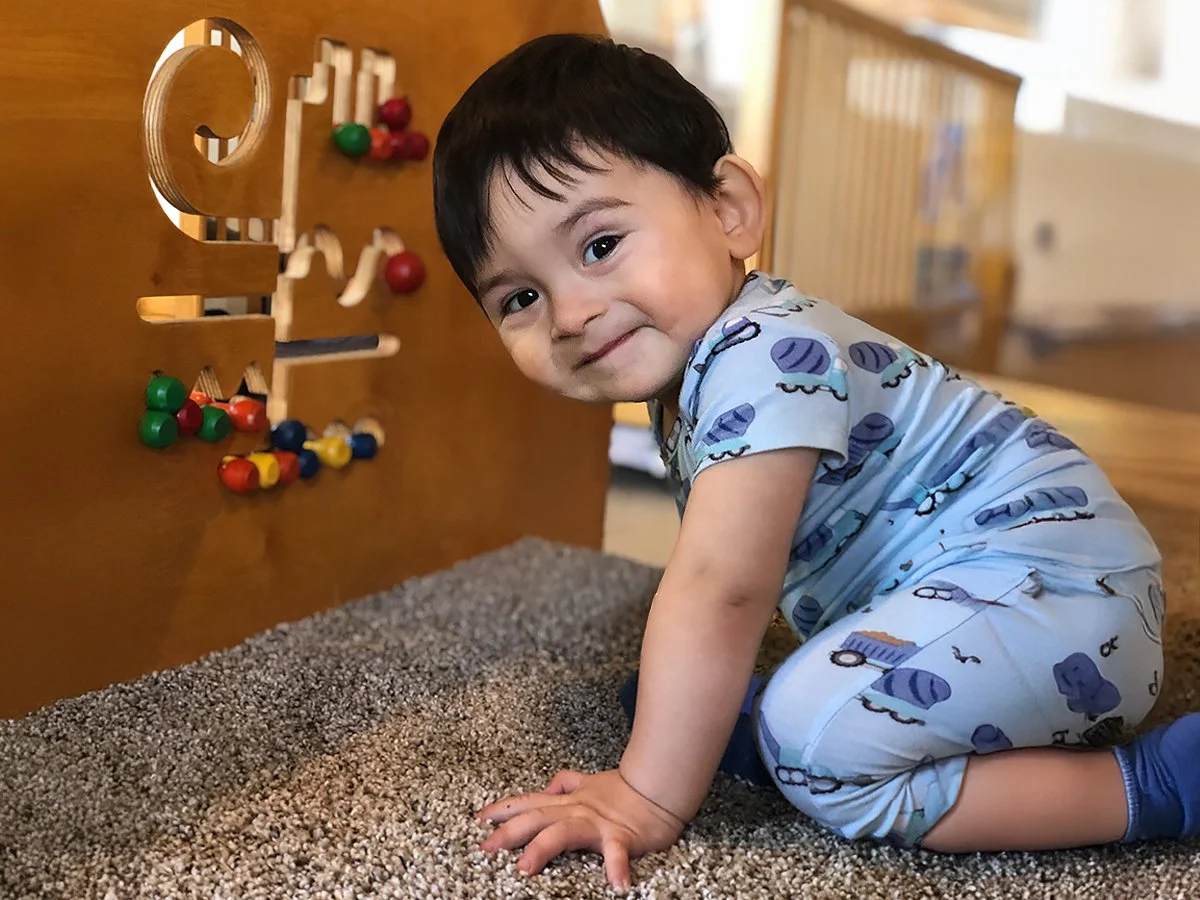
Our infant classrooms are thoughtfully prepared to meet the needs of our youngest learners. Everything in the space is scaled to a baby’s perspective—from low mirrors and floor beds to soft rugs and open shelving with developmentally appropriate materials.
We offer rich sensory experiences and safe opportunities for exploration—encouraging infants to reach, grasp, roll, crawl, and eventually walk when they are ready. Each item in the environment is carefully selected to align with the sensitive periods of early development.
Work Periods and Rhythms
Rather than adhering to a fixed group schedule, we follow each infant’s natural rhythms. Feeding, sleeping, and play are guided by each child’s individual needs. Our routines are predictable yet flexible, offering the security of consistency with the freedom for every baby to grow at their own pace.
Throughout the day, caregivers mindfully support children’s routines—allowing infants to participate in care tasks like holding their bottle, wiping their face, or exploring solid foods when developmentally ready. These moments build the foundation for independence and self-confidence.
Montessori-Trained Educators
Our infant guides are trained in both Montessori philosophy and responsive caregiving. They observe closely, respond thoughtfully, and build strong, loving relationships with each child. We treat each infant with dignity and respect, encouraging even the smallest child to be an active participant in their daily life.
Montessori educators understand that early experiences shape brain development. With this in mind, we support each infant’s natural desire to connect, explore, and grow—never rushing or interrupting their discoveries.
Beyond the Classroom
Even our youngest children benefit from time spent outdoors. Weather permitting, infants enjoy daily fresh air in a safe and shaded outdoor space, where they can feel the breeze, observe nature, and stretch their growing bodies. These moments in nature stimulate the senses and contribute to physical and emotional well-being.
Home Partnership
A strong relationship between home and school is essential, especially during infancy. We work closely with parents to understand each child’s routines, preferences, and needs. Daily communication ensures that families feel connected, informed, and confident in their child’s care.
We see parents as partners and collaborators. Together, we create a consistent, nurturing environment that supports each child’s whole development—from feeding and sleep routines to language and emotional growth.
The Montessori Difference
Unlike traditional daycare models, our infant program is built on the Montessori philosophy of respect for the child, freedom within limits, and individualized care.
• We follow each child’s developmental timetable, not a preset schedule.
• Our environment invites active exploration, not passive entertainment.
• We foster independence, even in the smallest tasks.
This intentional approach nurtures the whole child—body, mind, and spirit—and lays a strong foundation for joyful, lifelong learning.