

Toddlers (16 months–3 Years)
Caring Community
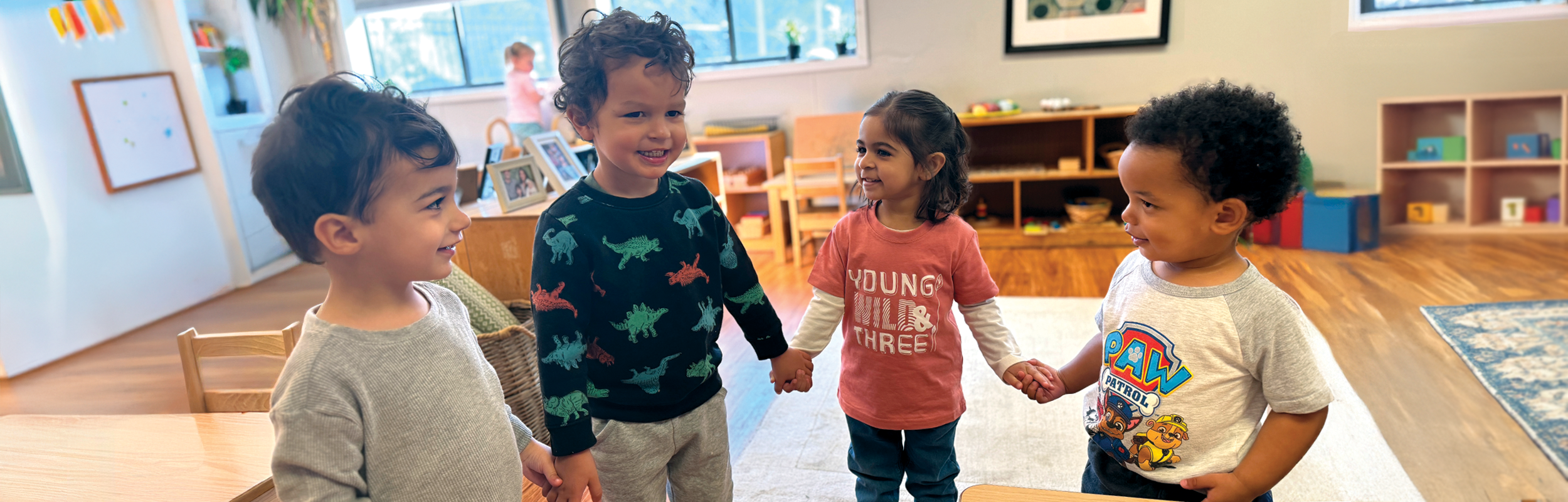
At Montessori Academy of North Hoffman, our Toddler Program for children ages 16 months to 3 years provides a warm, supportive environment where young children can begin to explore their world with confidence. During this stage, toddlers are becoming more mobile, more verbal, and more independent—and they need a setting that meets their growing desire for freedom within secure, loving boundaries.
Our Montessori-trained educators create peaceful spaces filled with trust, joy, and respect. Here, a toddler’s natural passion for discovery, movement, and meaningful work is nurtured through intentional care and engaging experiences.
Growth and Development
Toddlers are in a powerful stage of growth—gaining language, refining movement, asserting independence, and learning how to engage with the world around them. At Montessori Academy of North Hoffman, we support this exciting phase through hands-on learning, loving guidance, and a thoughtfully prepared environment that honors each child’s pace.
How We Nurture Key Areas of Development
🗣️ Language and Early Communication
We immerse toddlers in rich spoken language all day long—naming objects, describing actions, and inviting two-way conversation.
Picture cards, books, and language objects help build vocabulary and comprehension.
Songs, stories, and simple group lessons introduce rhythm and early storytelling.
🤲 Gross and Fine Motor Coordination
Toddlers are given freedom to move, climb, and explore in safe indoor and outdoor spaces designed for their growing bodies.
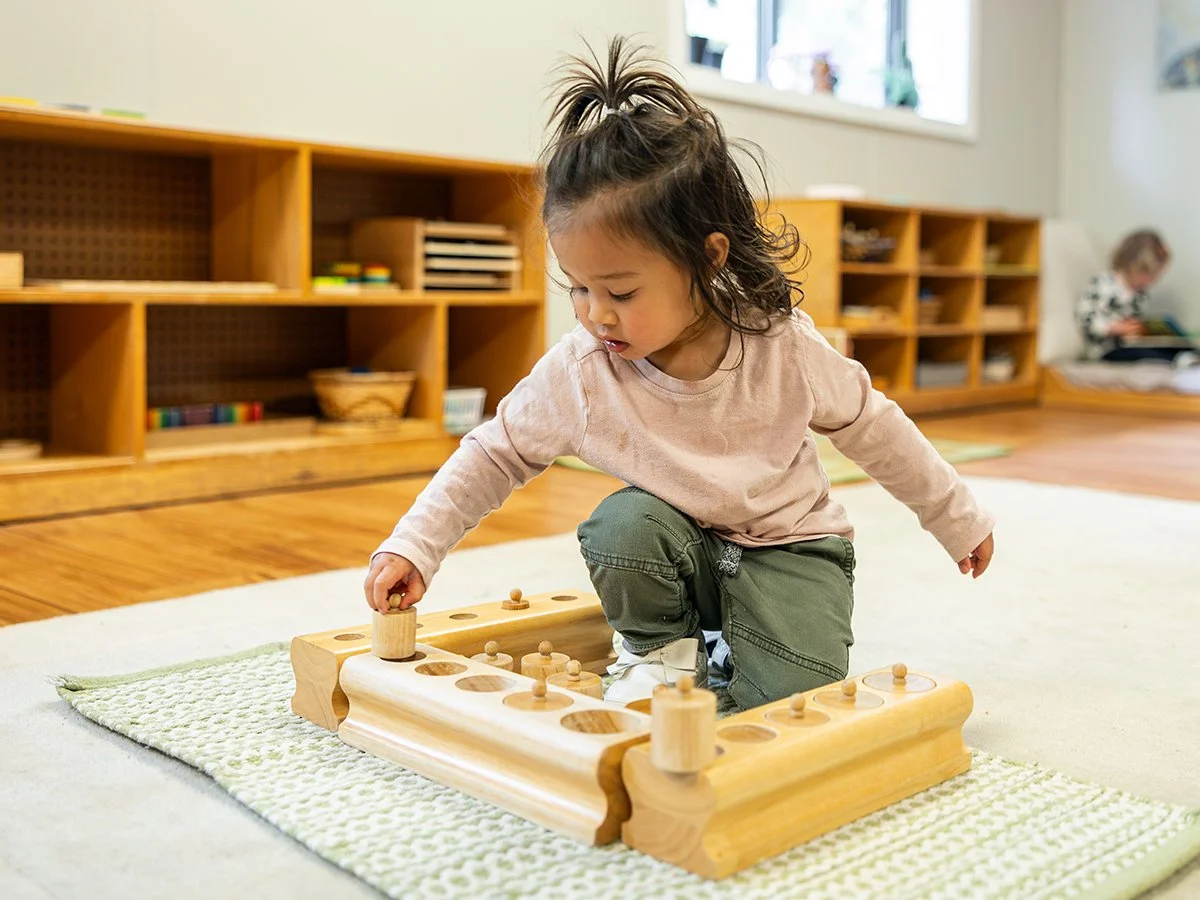
Activities like carrying trays, spooning beans, and using child-sized brooms build strength, balance, and coordination.
Manipulatives such as puzzles, stacking materials, and pegging activities refine fine motor control and hand-eye coordination.
🌱 Independence in Self-Care
We encourage toddlers to participate in care routines such as dressing, toileting, wiping hands and faces, and setting the table.
All materials are sized for their use, fostering a sense of success and ownership.
Toilet learning is approached with respect, patience, and close communication with families to ensure a consistent and supportive process.
🧠 Concentration and Task Completion
Our work cycle allows toddlers to select materials that interest them, work with focus, and return items independently—building attention span and executive functioning.
Tasks are designed to have a clear beginning, middle, and end, reinforcing internal order and a sense of accomplishment.
💞 Social Awareness and Emotional Regulation
Through modeling and gentle redirection, toddlers learn to express feelings, take turns, and interact kindly with others.
Group experiences like circle time, music, and movement games build a sense of community and shared joy.
Grace and courtesy lessons help toddlers begin to understand empathy, respect, and how to function peacefully in a group setting.
🔍 Curiosity and Confidence in Learning
The freedom to choose activities allows toddlers to follow their interests and take initiative in their learning.
Educators support without over-correcting, allowing children to problem-solve and feel capable.
New challenges are introduced through observation, never rushed—fostering a love of discovery and a “can-do” attitude.
Prepared Classroom Environments
Our toddler classrooms are carefully designed to support movement, exploration, and choice. Shelves are low, materials are simple and purposeful, and the entire space is arranged to empower toddlers to act independently and confidently.
The environment includes practical life materials (like sponges, brooms, and pouring works), sensorial items, language objects, books, puzzles, and art materials—all accessible to the child. The layout encourages freedom of movement while promoting order, concentration, and care for the environment.
Work Periods and Rhythms
Toddlers thrive on rhythm and consistency. Each day follows a predictable yet flexible flow that includes time for independent work, group connection, movement, snacks, toileting, and outdoor play. Our toddlers experience the Montessori work cycle, which allows them to choose activities, engage with focus, and return materials with growing responsibility.
While the classroom offers a peaceful hum of focused activity, we also incorporate group experiences like music, stories, movement games, and shared meals—providing a well-rounded social and sensory experience.
Montessori-Trained Educators
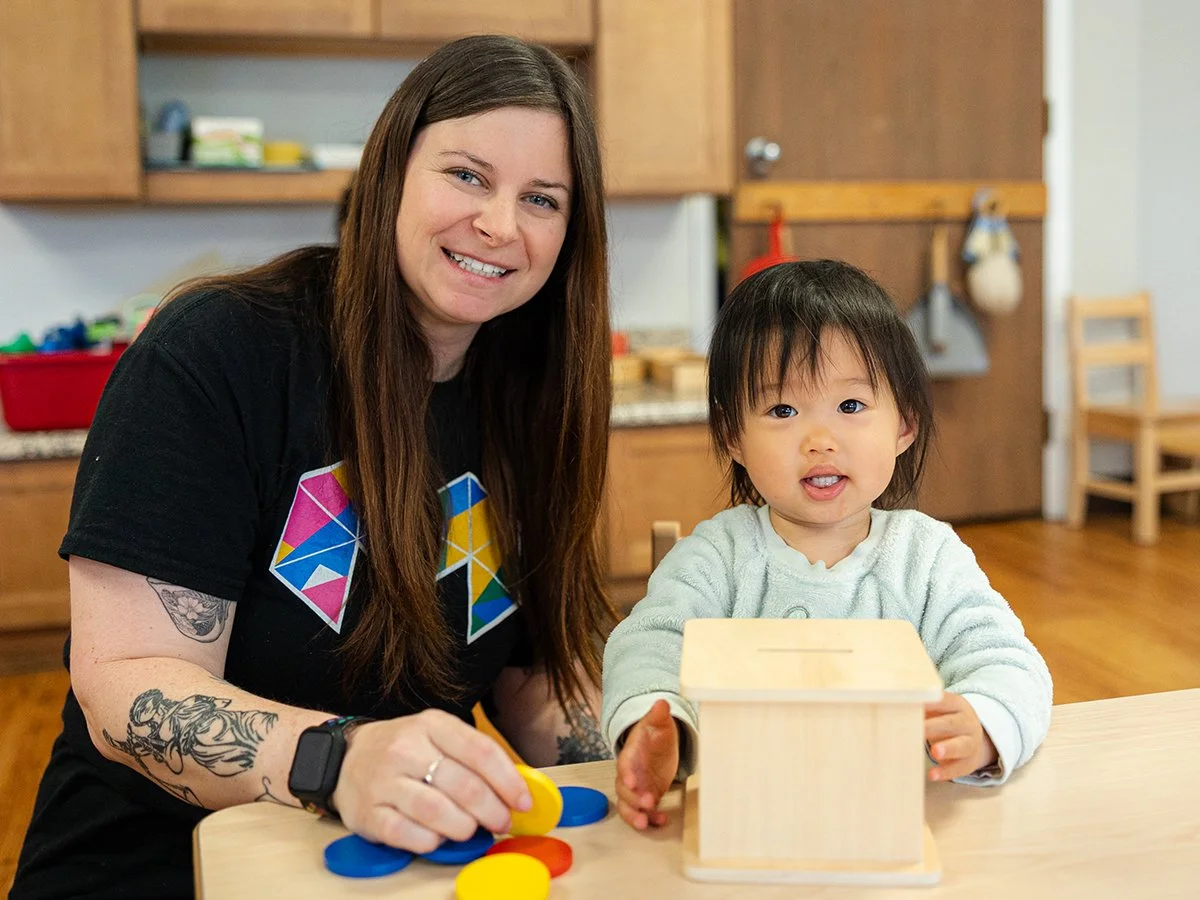
Our toddler guides are highly trained in both Montessori pedagogy and early childhood development. They serve as warm, calm, and consistent presences—modeling language, respecting each child’s pace, and gently guiding them toward independence.
Each guide observes closely and thoughtfully, offering the right level of support without interrupting the child’s natural development. Whether helping a toddler put on their coat or supporting early toilet learning, our educators approach every moment as a learning opportunity.
Beyond the Classroom
Toddlers are naturally drawn to the world beyond the classroom walls. Outdoor exploration is an essential part of the day, offering space to run, climb, and breathe in the natural world. We also offer creative enrichment through music, art, and movement.
While the toddler years focus on building foundational skills, our program provides a rich and joyful experience that nurtures the whole child—mind, body, and spirit.
Home Partnership
Strong communication with families is central to the toddler experience. We work closely with parents to support consistency between home and school, especially during major developmental transitions like toilet learning or changes in routine.
Regular updates and photos, open communication, and respectful dialogue ensure that families feel involved and supported. Our goal is to partner with you in fostering your child’s independence, confidence, and joy in learning.
The Montessori Difference
Our toddler program is rooted in respect for the child’s individuality and natural development. Unlike traditional daycare, Montessori toddlers:
• Choose purposeful activities from a carefully prepared environment.
• Participate in real-life tasks like cleaning, food prep, and dressing.
• Engage in uninterrupted work time that fosters concentration.
• Learn social skills through modeling and grace and courtesy lessons.
• Develop independence at a pace that honors their readiness.
This approach lays the foundation not only for academic success, but for life-long confidence, responsibility, and love of learning.