Creating Together: Honoring Loved Ones on Día de los Muertos
Over the past few weeks, our Spanish teacher, Profe. Núñez, and our art teacher, Ms. Meeta, have been leading students into the vibrant and meaningful traditions of Día de los Muertos. This celebration, whose name in Spanish means “Day of the Dead,” has deep roots in Indigenous Mesoamerican cultures and was later blended with Catholic traditions. Today, it is a joyful way to remember loved ones who have passed, celebrate their lives, and keep their stories close.
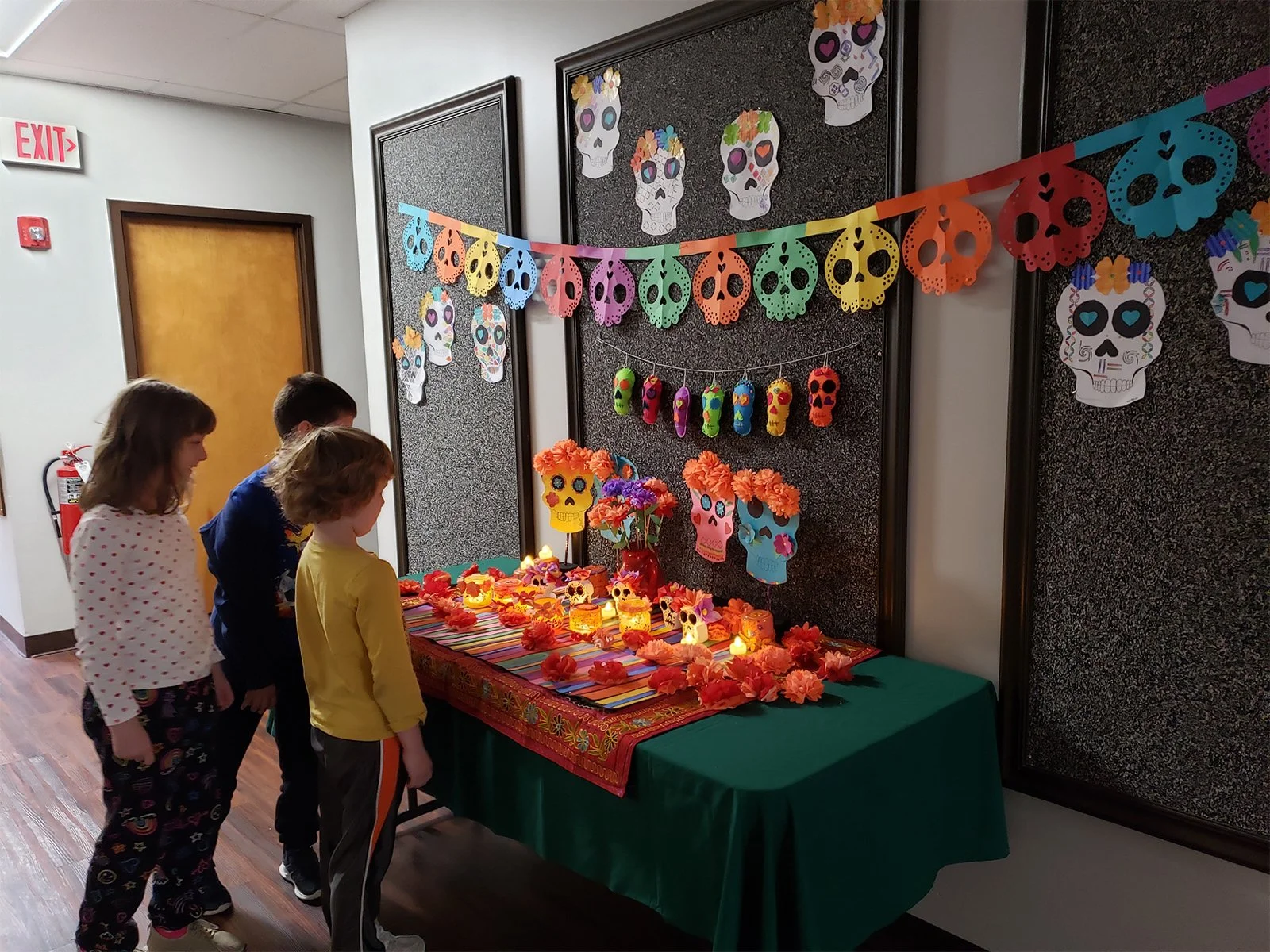
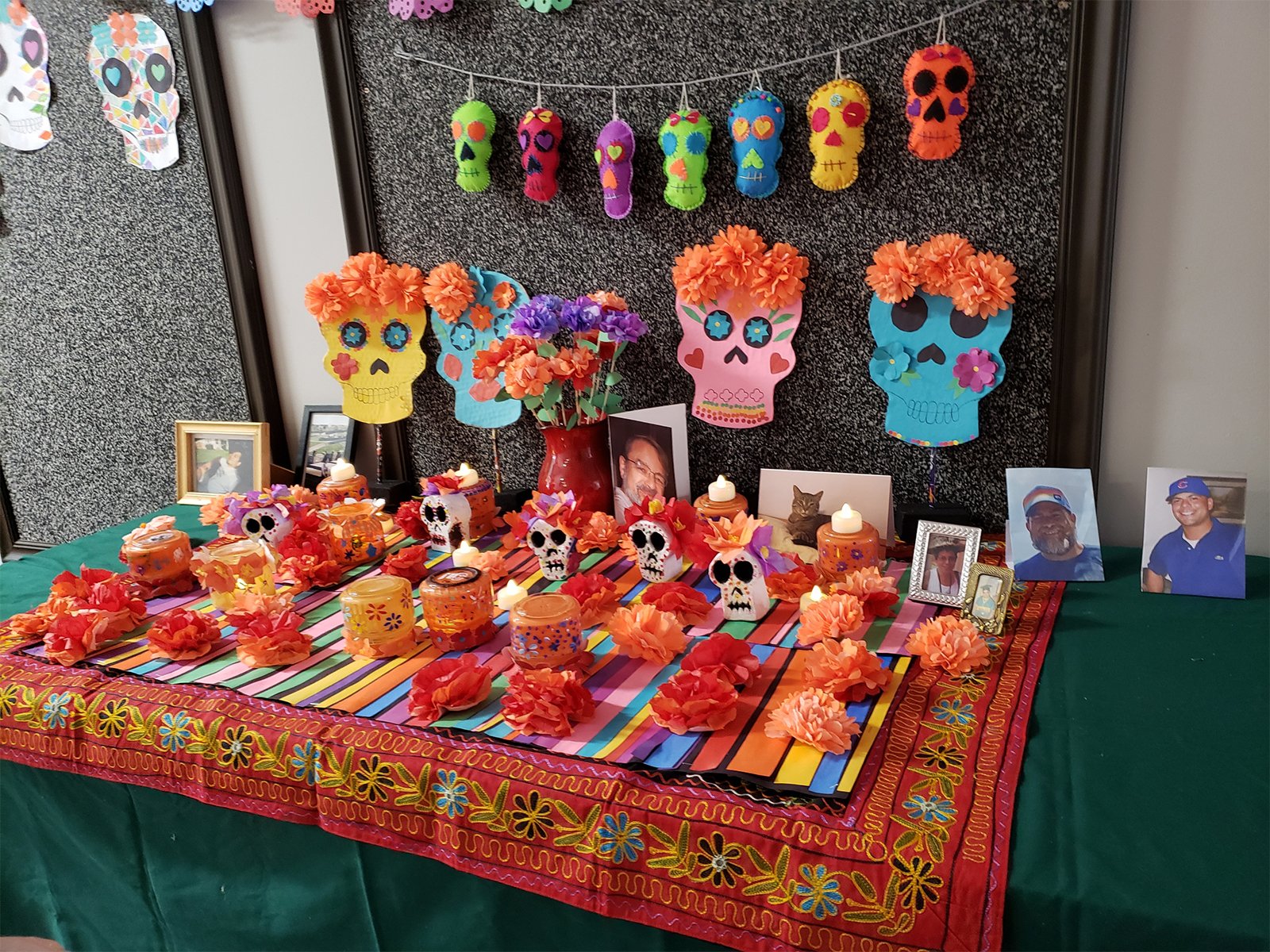
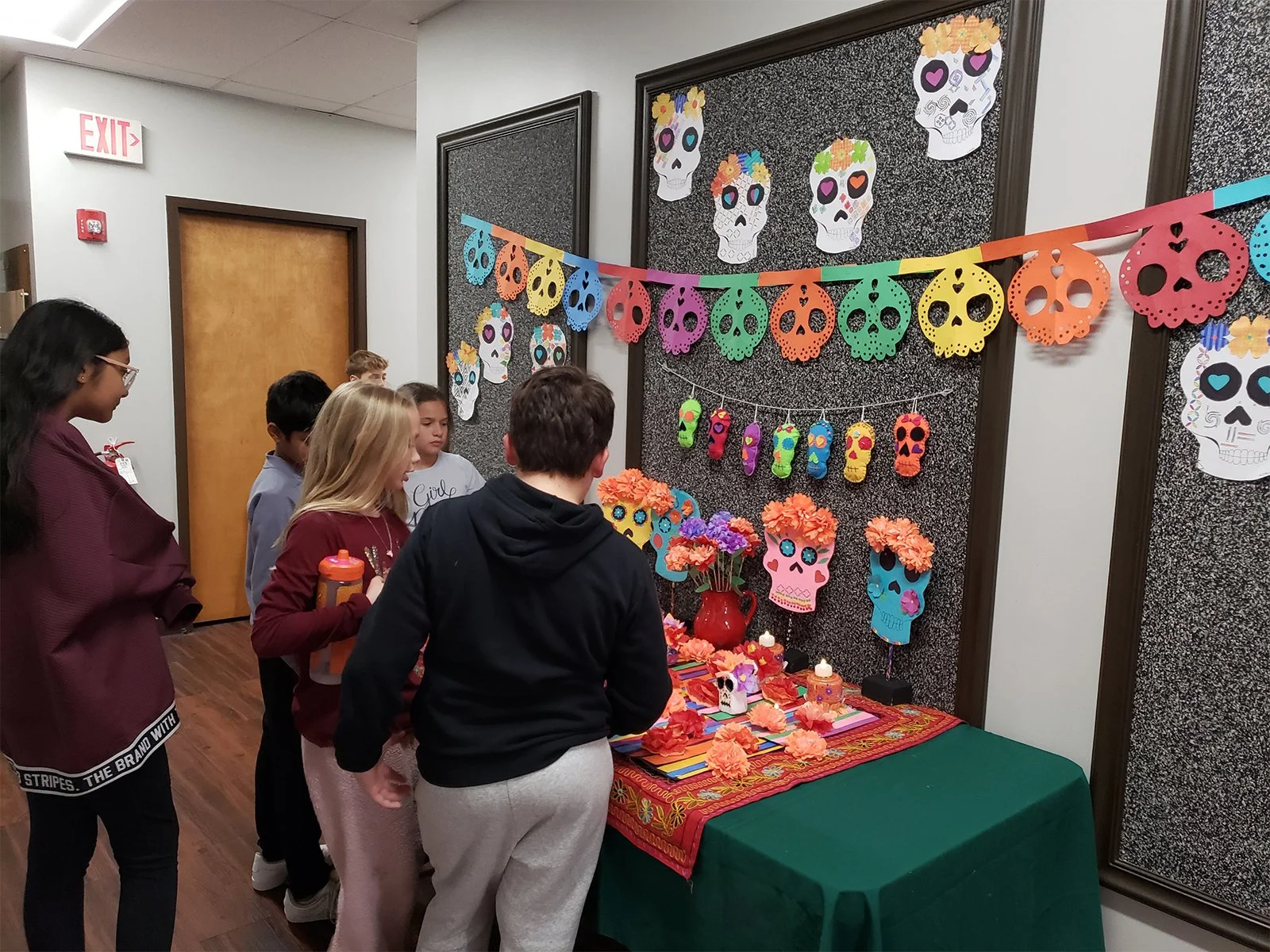
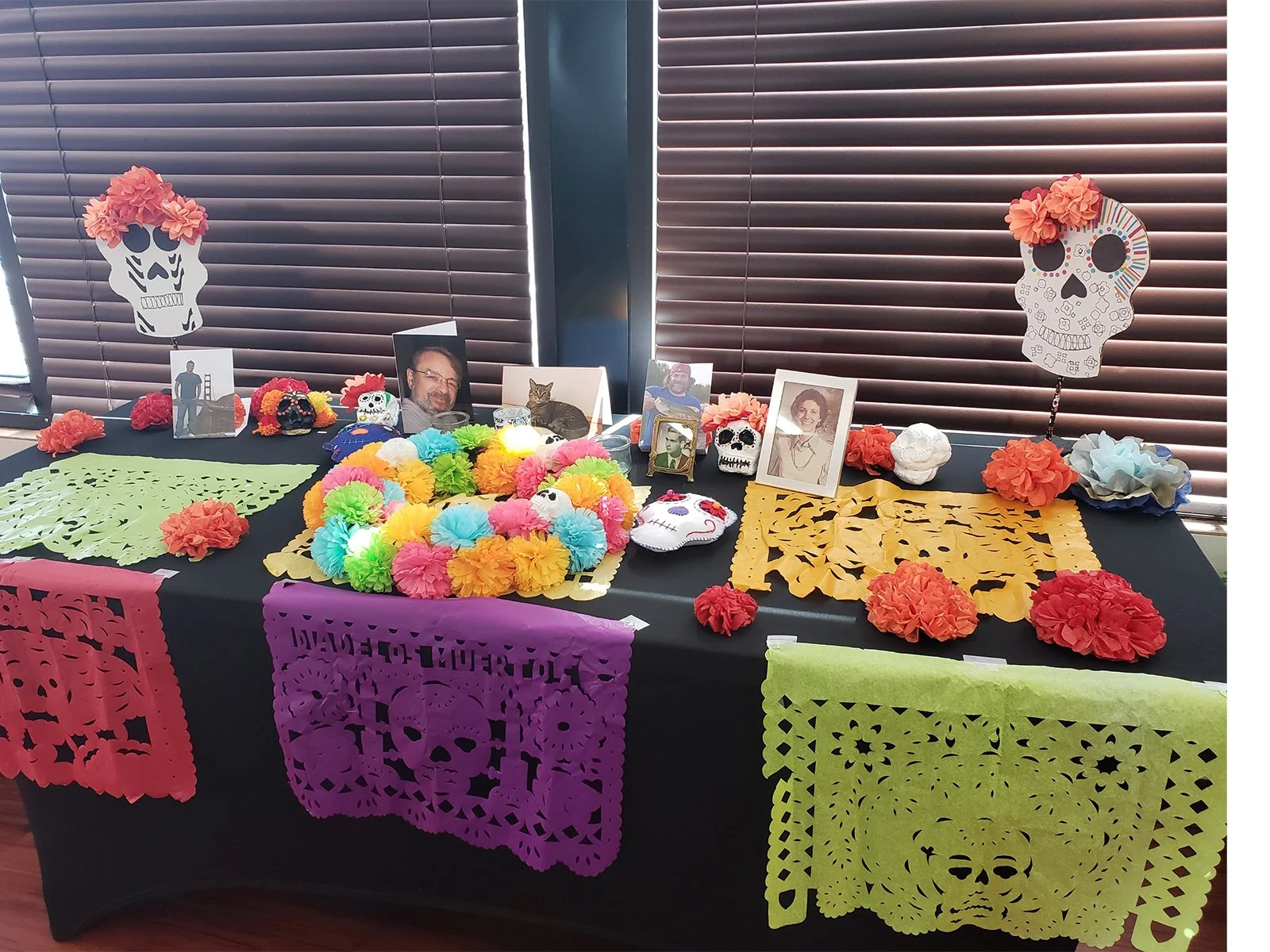
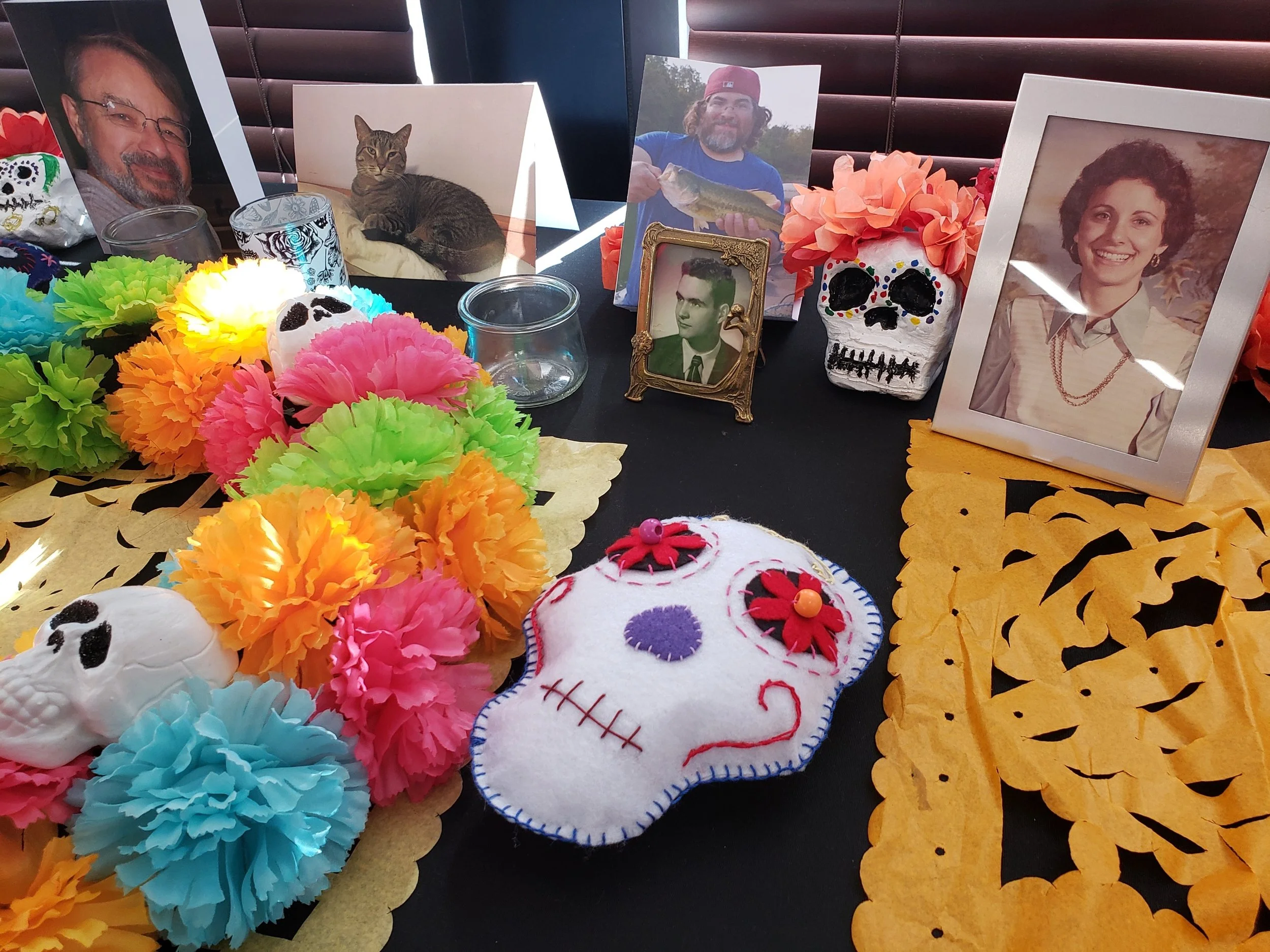
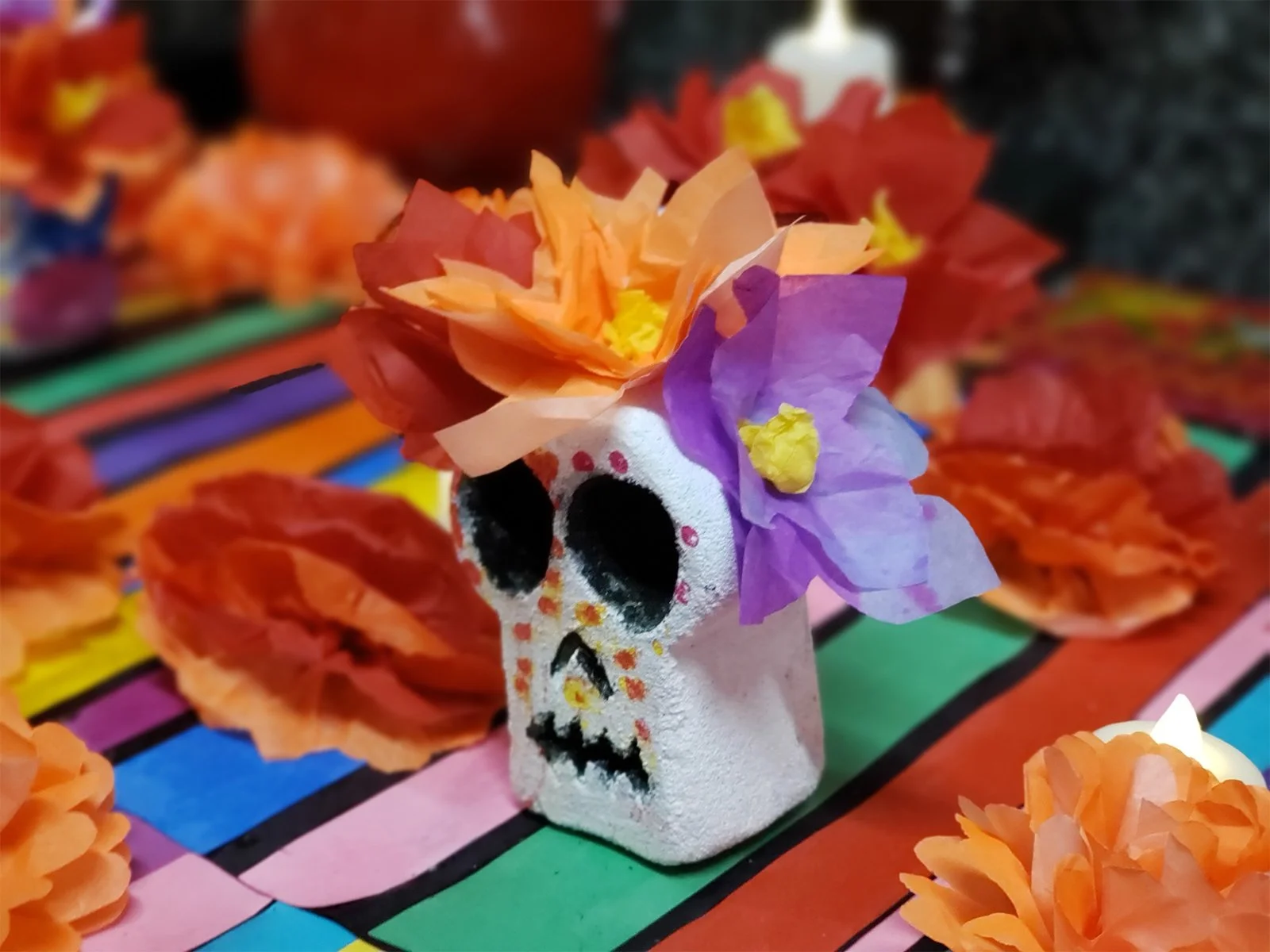
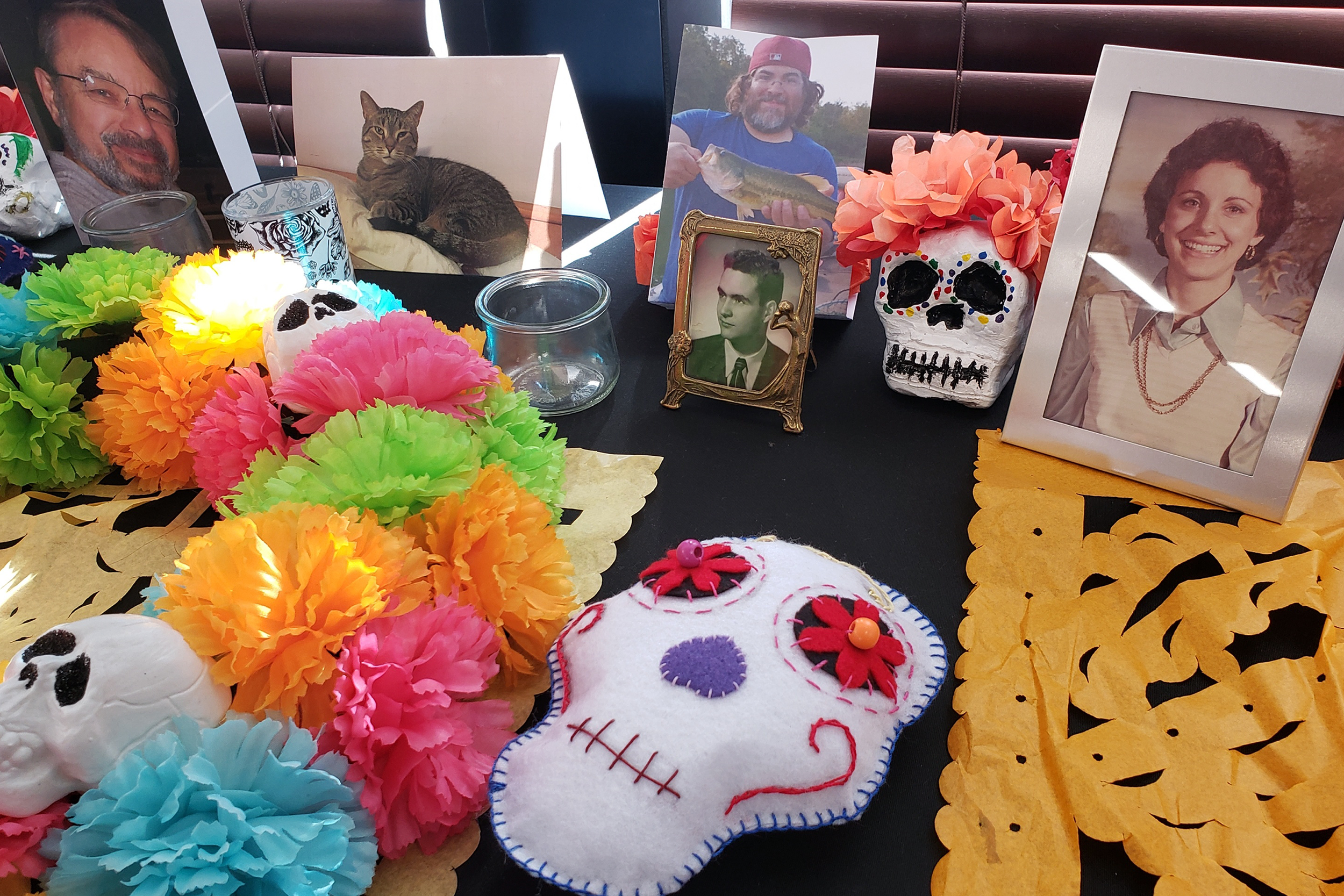
One of the most recognized parts of this holiday is the ofrenda, an altar lovingly decorated with photos, candles, marigolds, and favorite foods of those being remembered. Teachers and students worked together to create ofrendas at Freeman East and West, and families were invited to add photos of relatives or pets they wished to honor.
As Ms. Meeta shared, “When students shared memories with classmates and teachers about their loved ones who have passed, I could see their understanding, acceptance, and appreciation for life deepen.”
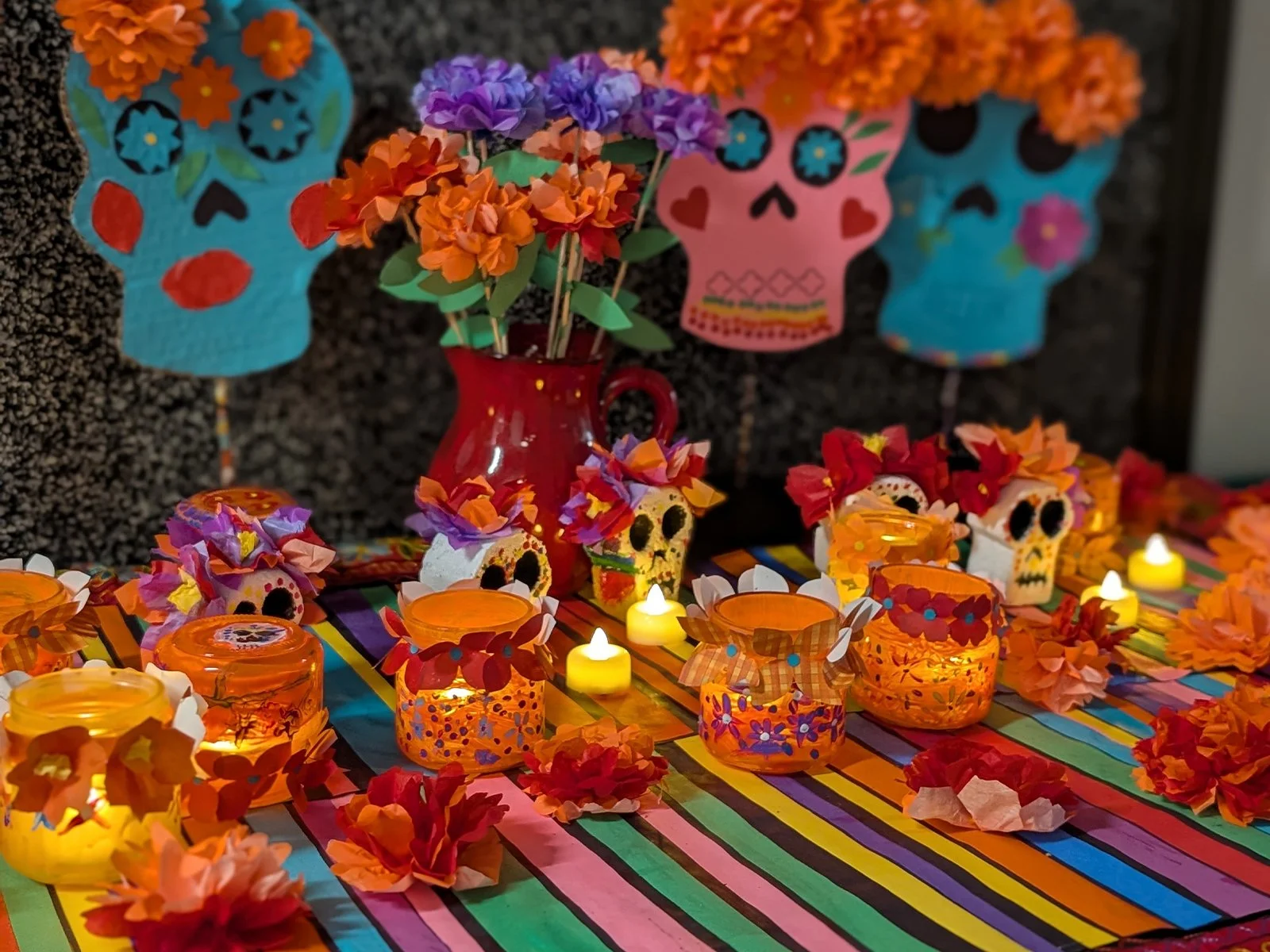
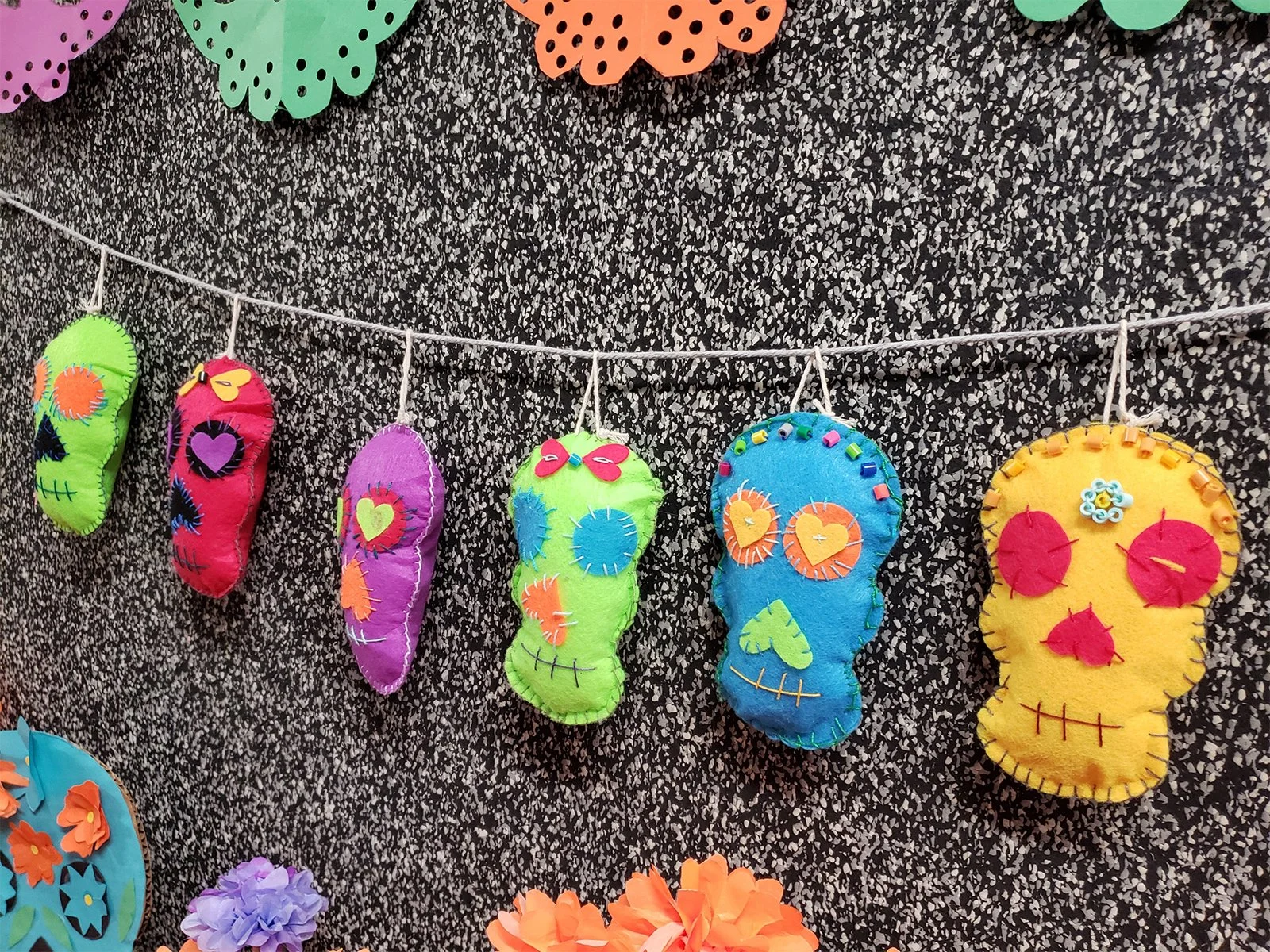
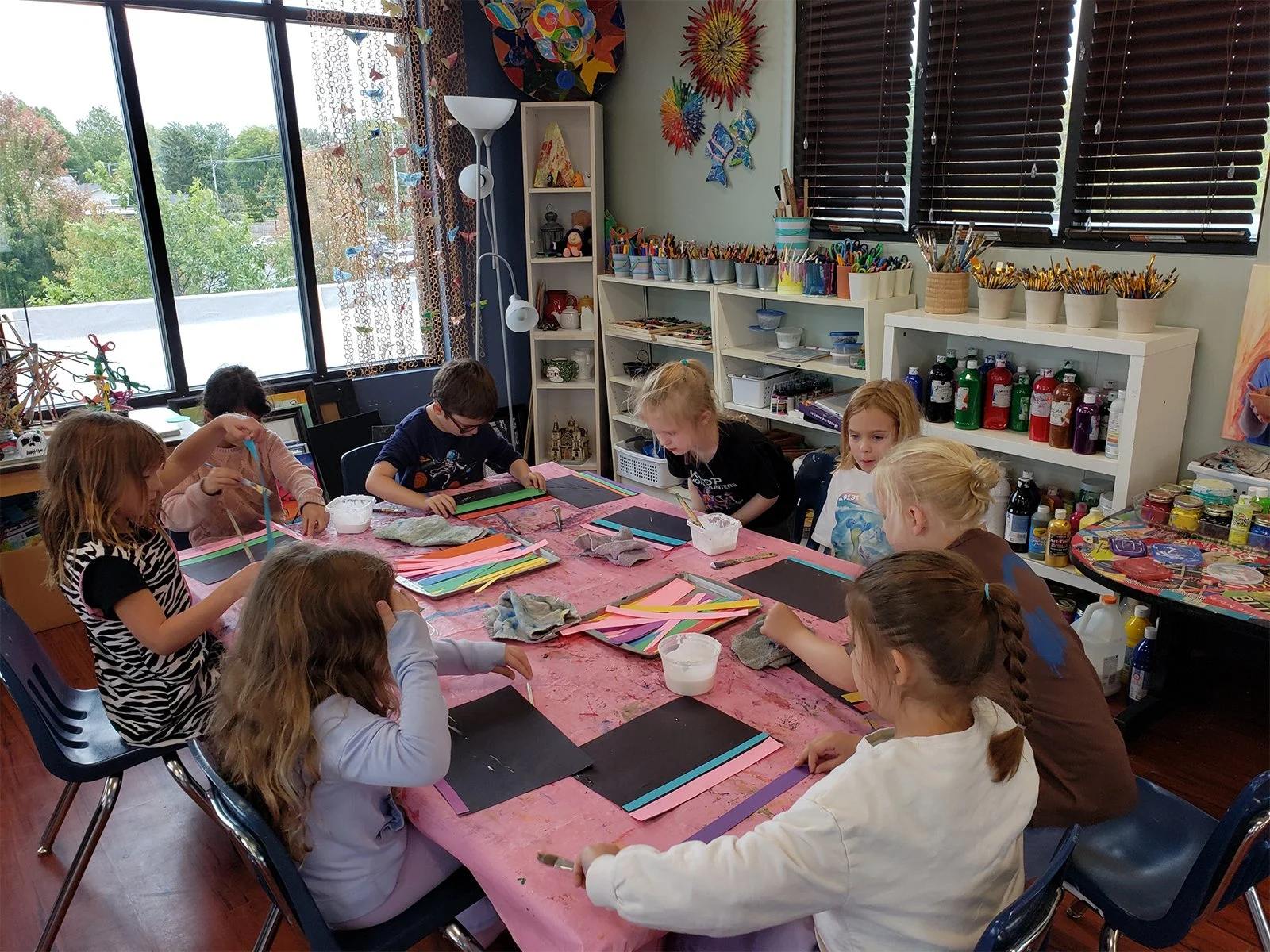
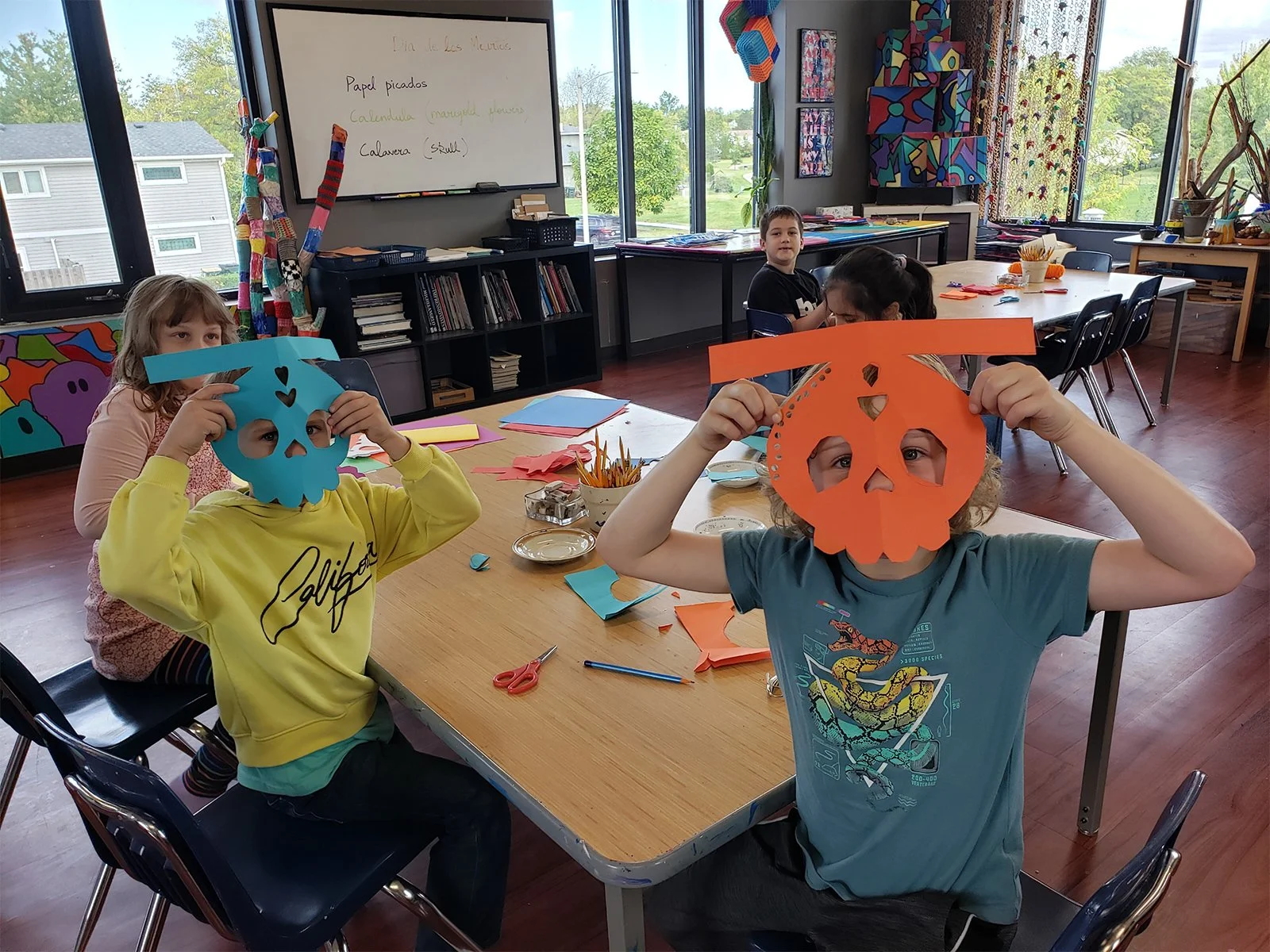
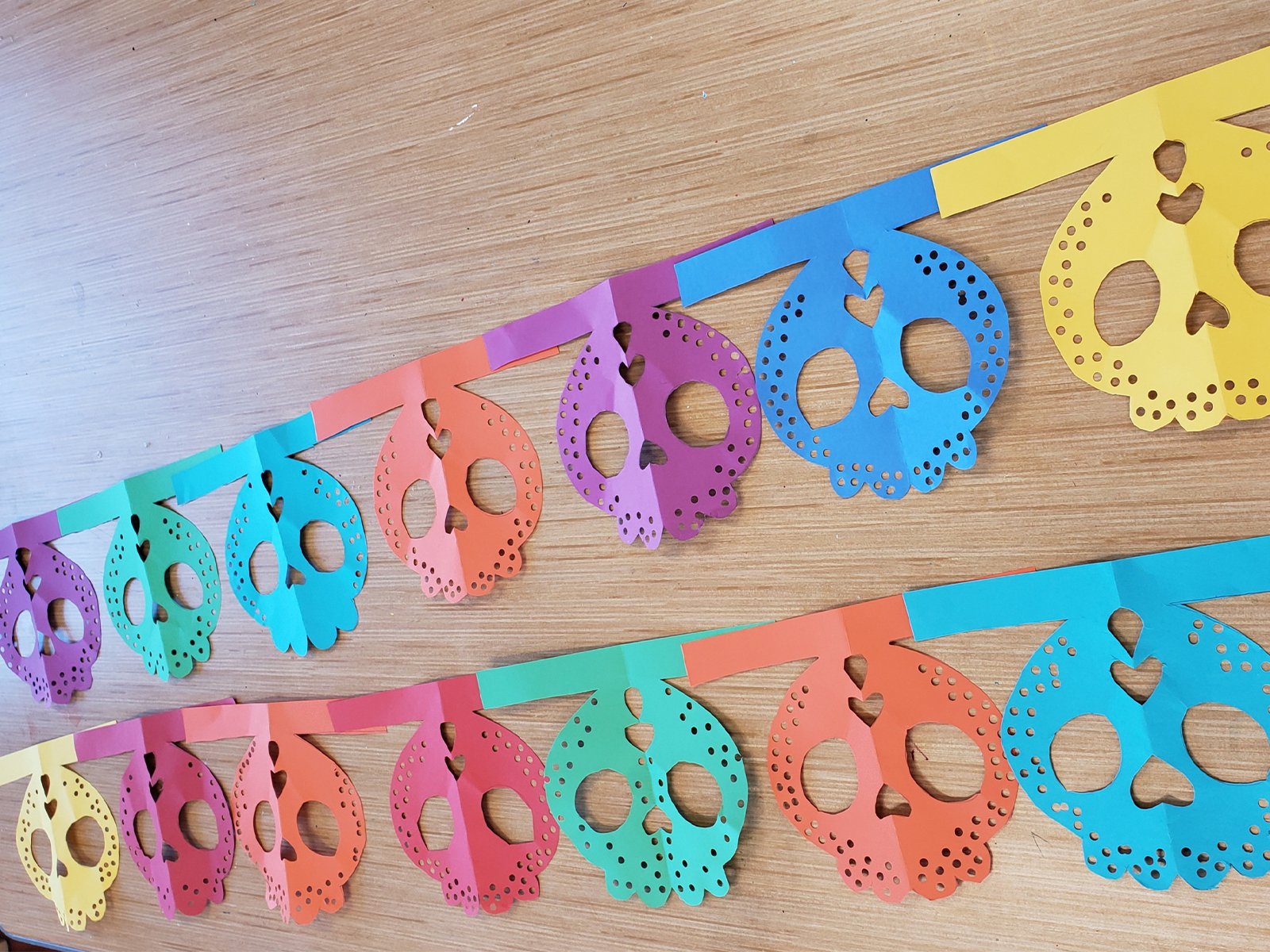
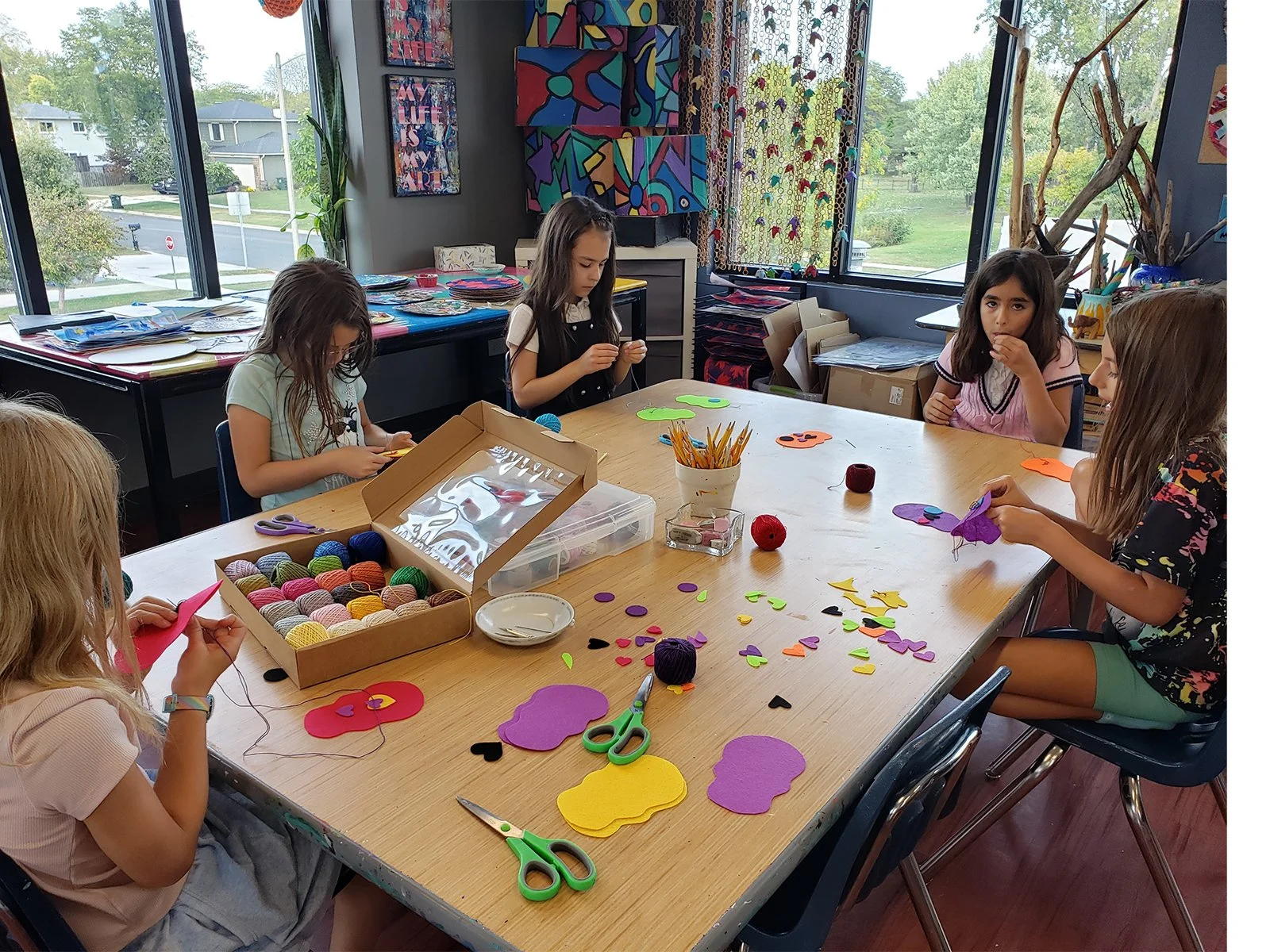
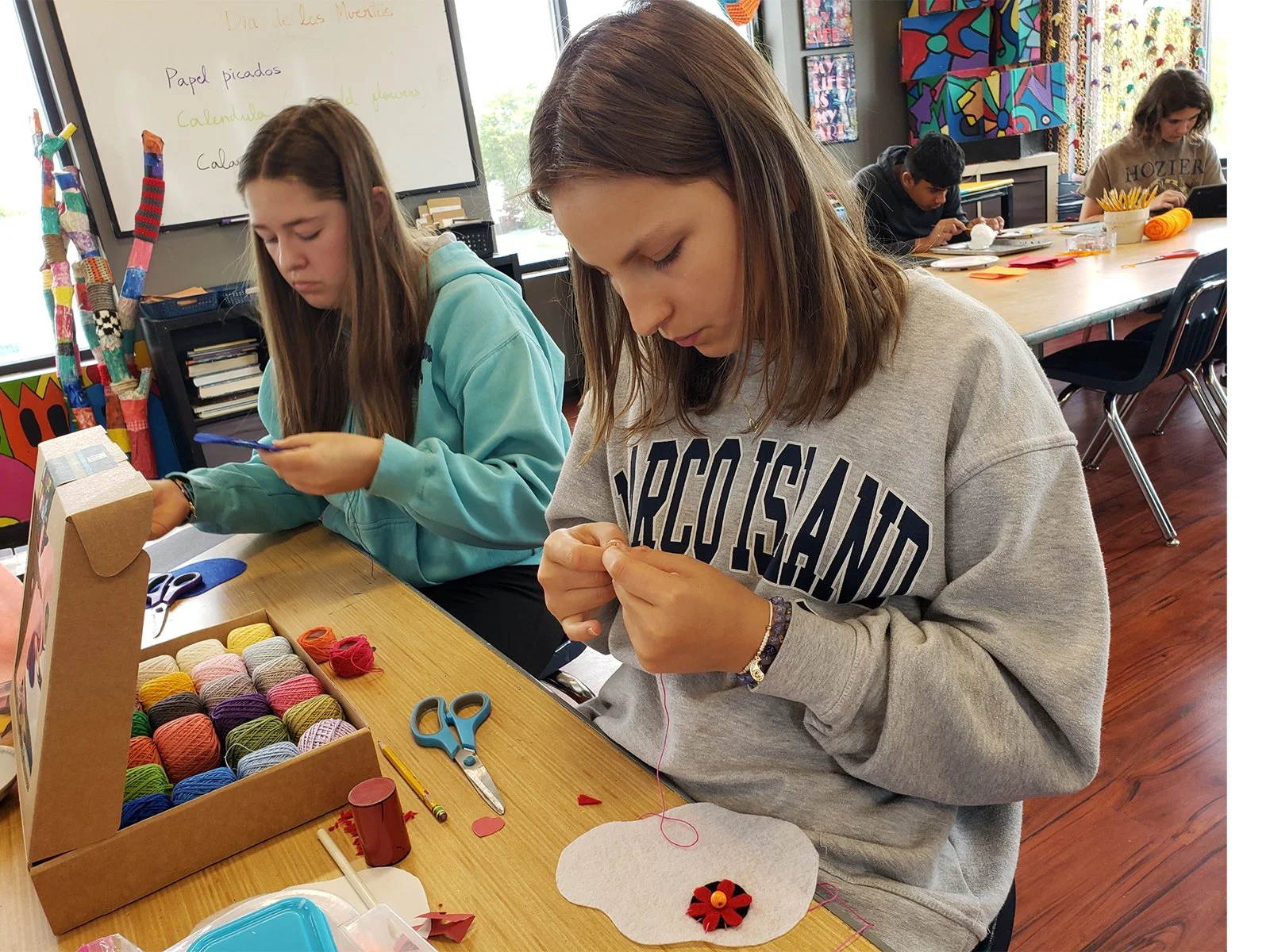
Each level contributed something special. First graders designed a bright serape-inspired table covering. A serape is a traditional Mexican textile known for its bold stripes and woven patterns, often used as a shawl or blanket. Second graders crafted papel picado, the traditional tissue-paper banners whose name means “punched” or “perforated” paper. Third and fourth graders stitched soft calaveras, or decorative skulls often used during the holiday.
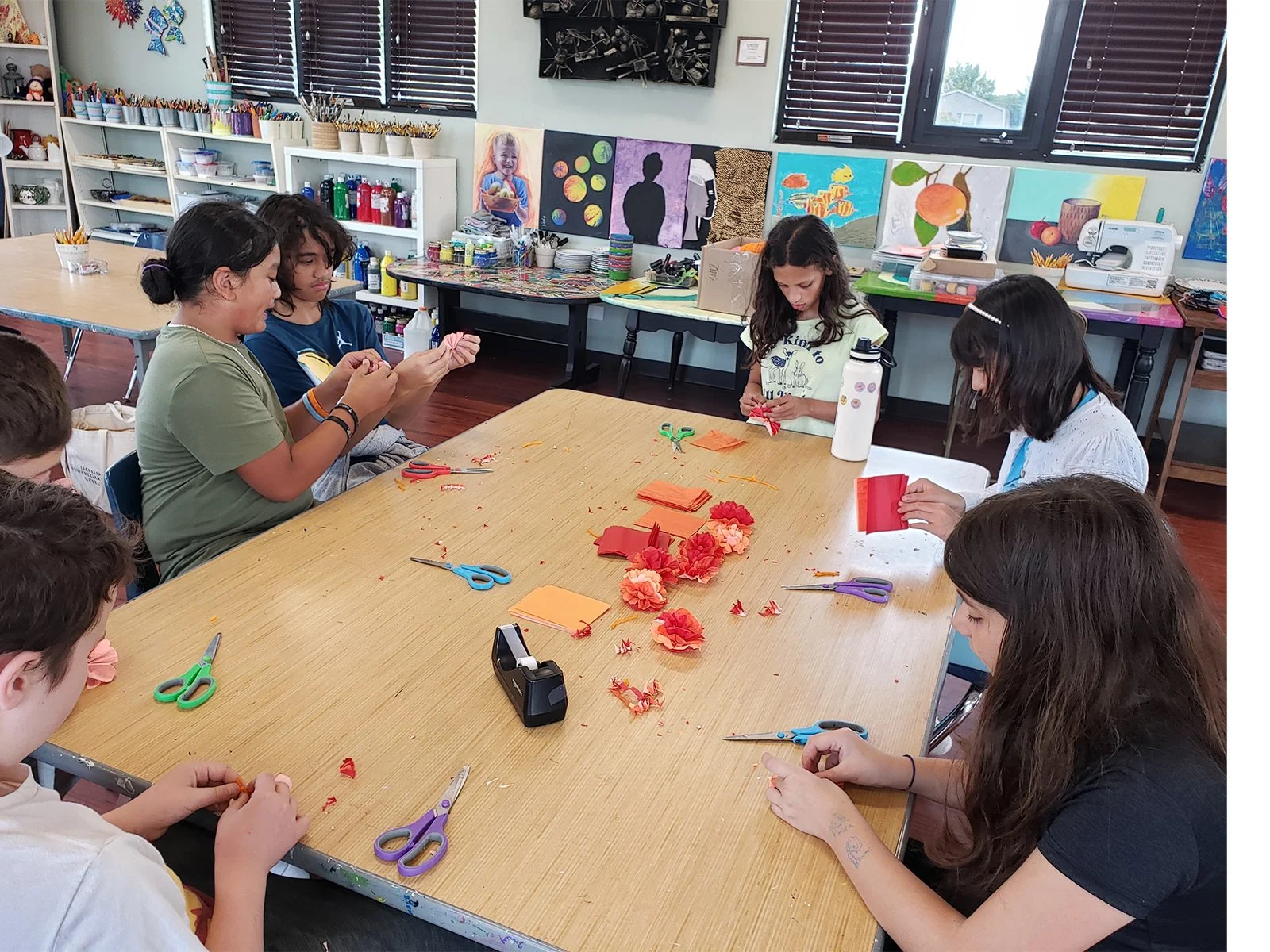
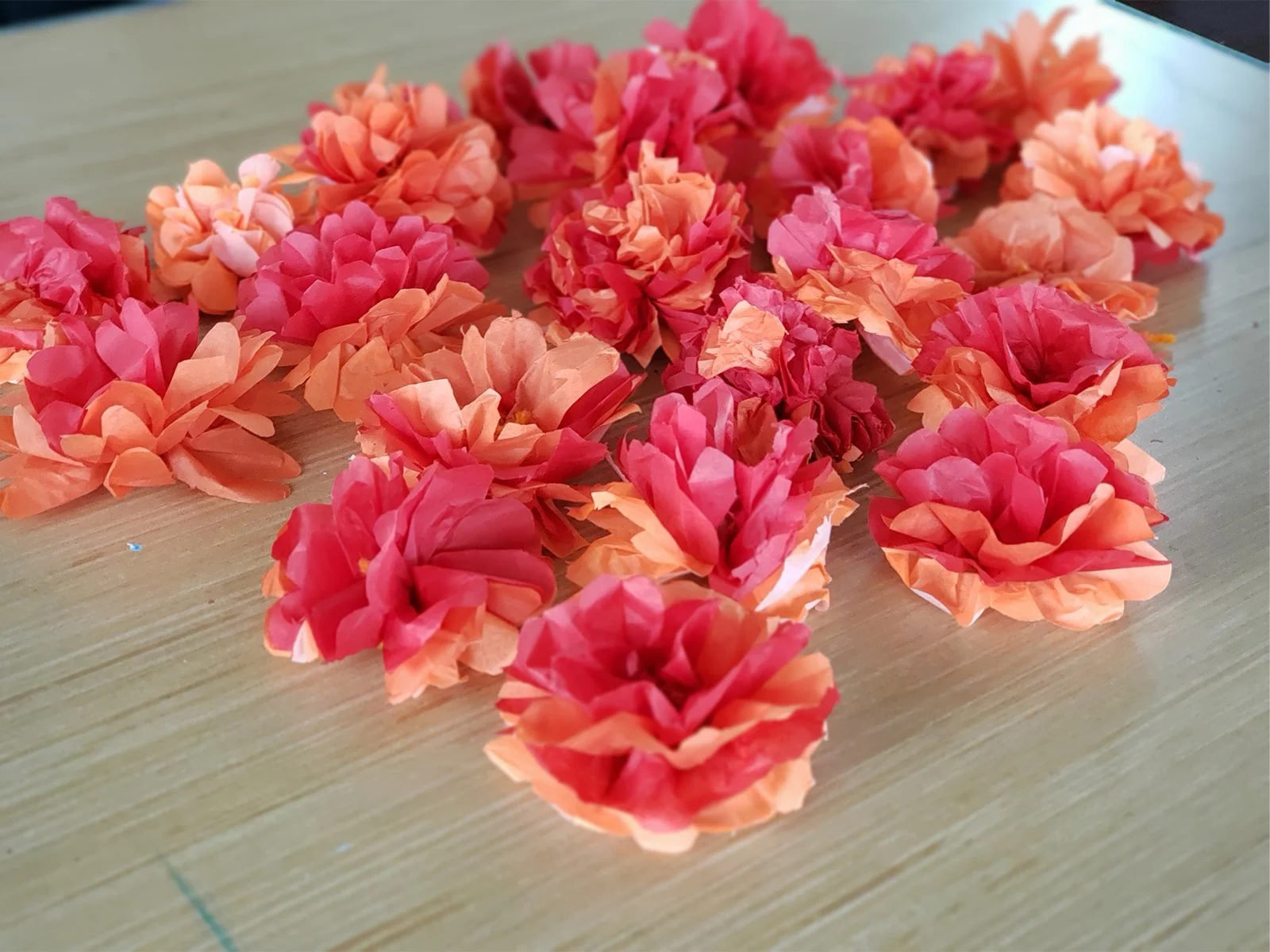
Fifth graders painted glass jars to hold tea lights, and sixth graders shaped delicate tissue-paper marigolds. These flowers, called cempasúchil in Mexico, come from the Nahuatl word meaning “flower of twenty petals” and are believed to guide spirits with their bright color and scent. Traditional flores de cempasúchil are known for their deep orange hue and are often placed along pathways to help loved ones find their way home.
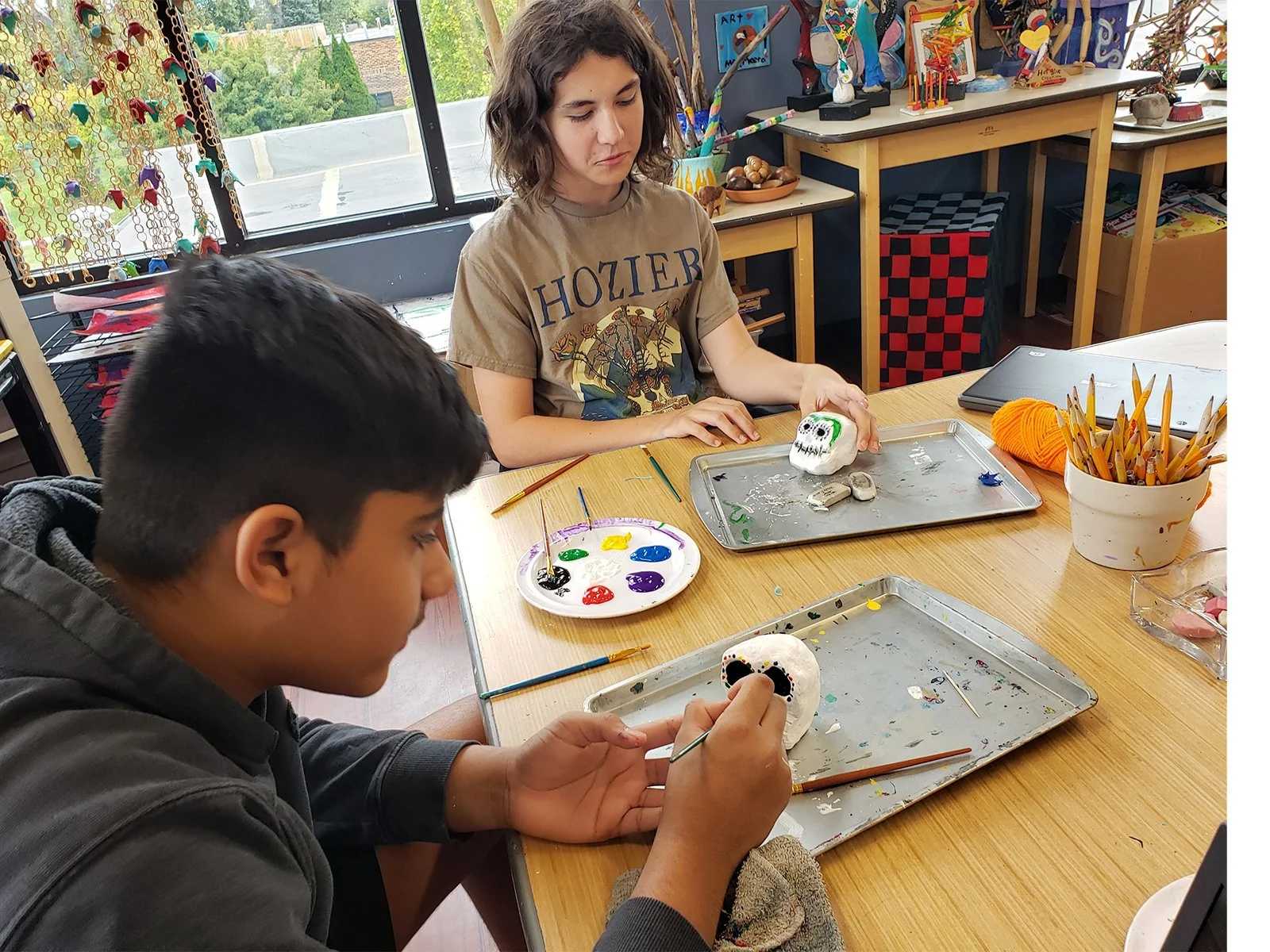
Erdkinder took on an even wider range of traditions. Student A. J. Ackmann explained it this way: “The Erdkinder students participated in a number of different activities to celebrate this holiday. First, we decorated the Spanish room with papel picado. Second, we set up an ofrenda with photos of loved ones who have passed, some with small gifts for them. Lastly, we baked conchas with Ms. Leticia, a traditional Mexican buttery sweet bread topped with icing made to look like a seashell. In these ways we honored and remembered our loved ones.”
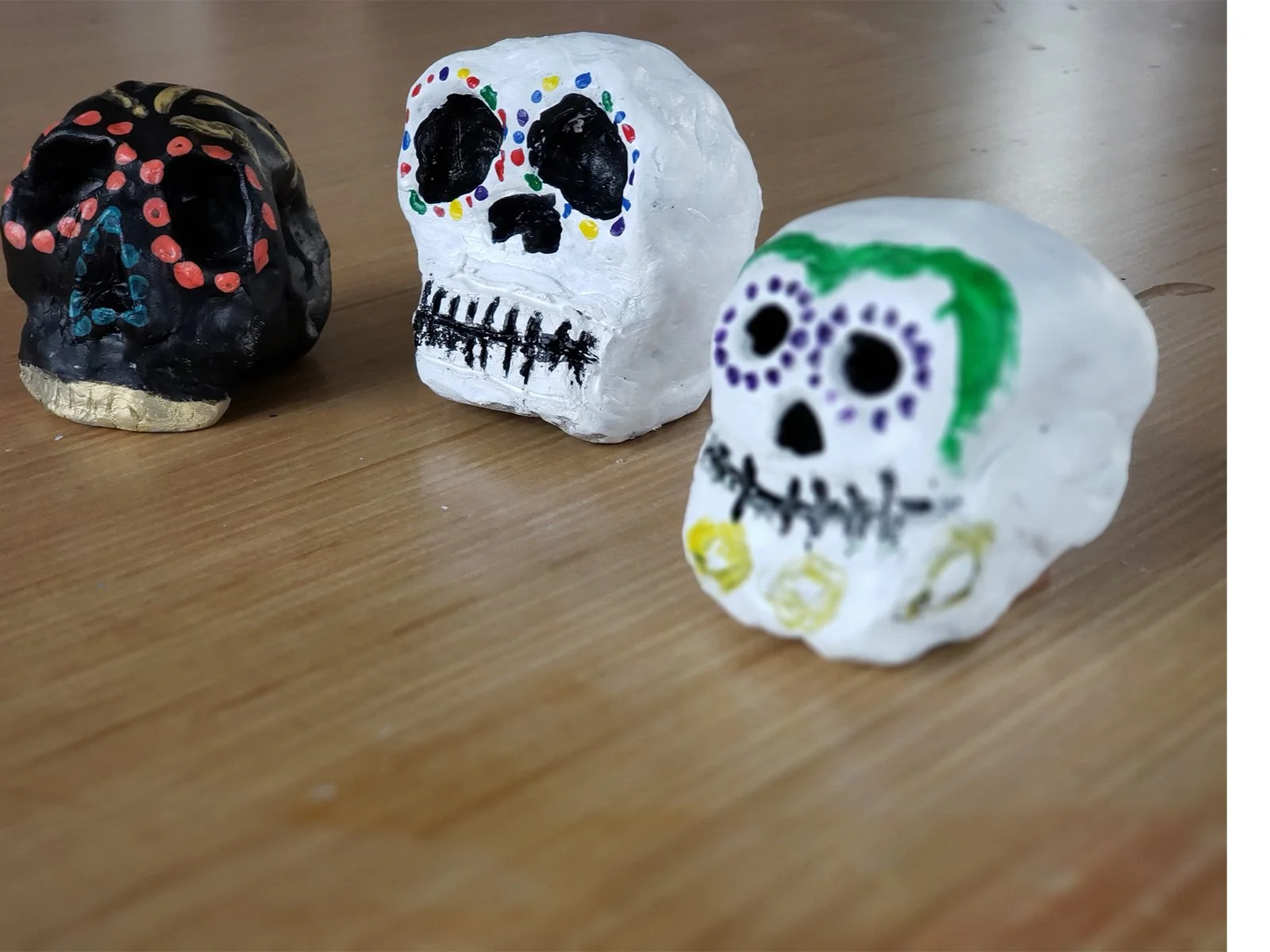
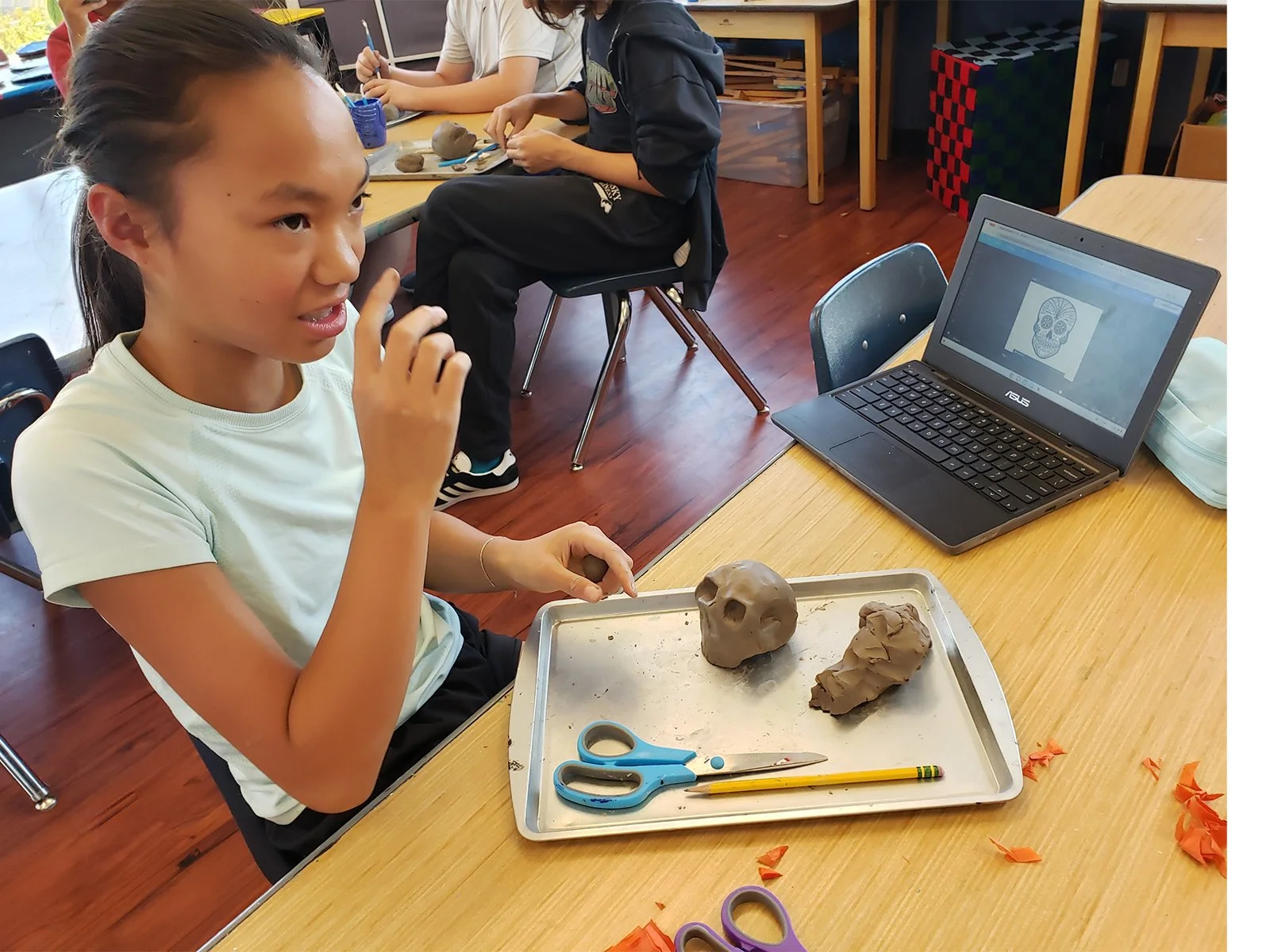
Profe. Núñez added, “The Erdkinder students also worked with Ms. Meeta to make beautiful flores de cempasúchil and calaveras using clay, cardboard, and embroidery.”
Seeing all of these pieces come together was a moving reminder of how creativity, culture, and community help our children understand the world and celebrate the people who have shaped their lives.