

Creating Environments for Independence and Joy
At school, your child thrives in a space carefully prepared to foster independence, curiosity, and care for their surroundings. You can continue this learning at home by extending Montessori principles into your everyday routines. Small, thoughtful changes in your home environment can help your child feel capable, calm, and connected.
The Bedroom: A Space for Rest and Responsibility
A Montessori-inspired bedroom is simple, peaceful, and designed at your child’s level. A low bed encourages independence at bedtime and during morning routines. Low shelves for books and baskets for clothing allow your child to make choices and take pride in keeping their space tidy. This sense of order and ownership nurtures confidence and self-discipline. You can reinforce order by labeling shelves or taking a picture of what a “tidy” shelf looks like.
Play Spaces: Purposeful and Inviting
Children thrive when their play spaces are uncluttered and intentional. Choose a few high-quality, open-ended toys made of natural materials and place them neatly on low shelves. Rotate items every few weeks to renew interest and focus. Keeping toys at your child’s height invites independent play and responsibility for cleaning up.
Practical Life at Home: Chores as Learning Opportunities
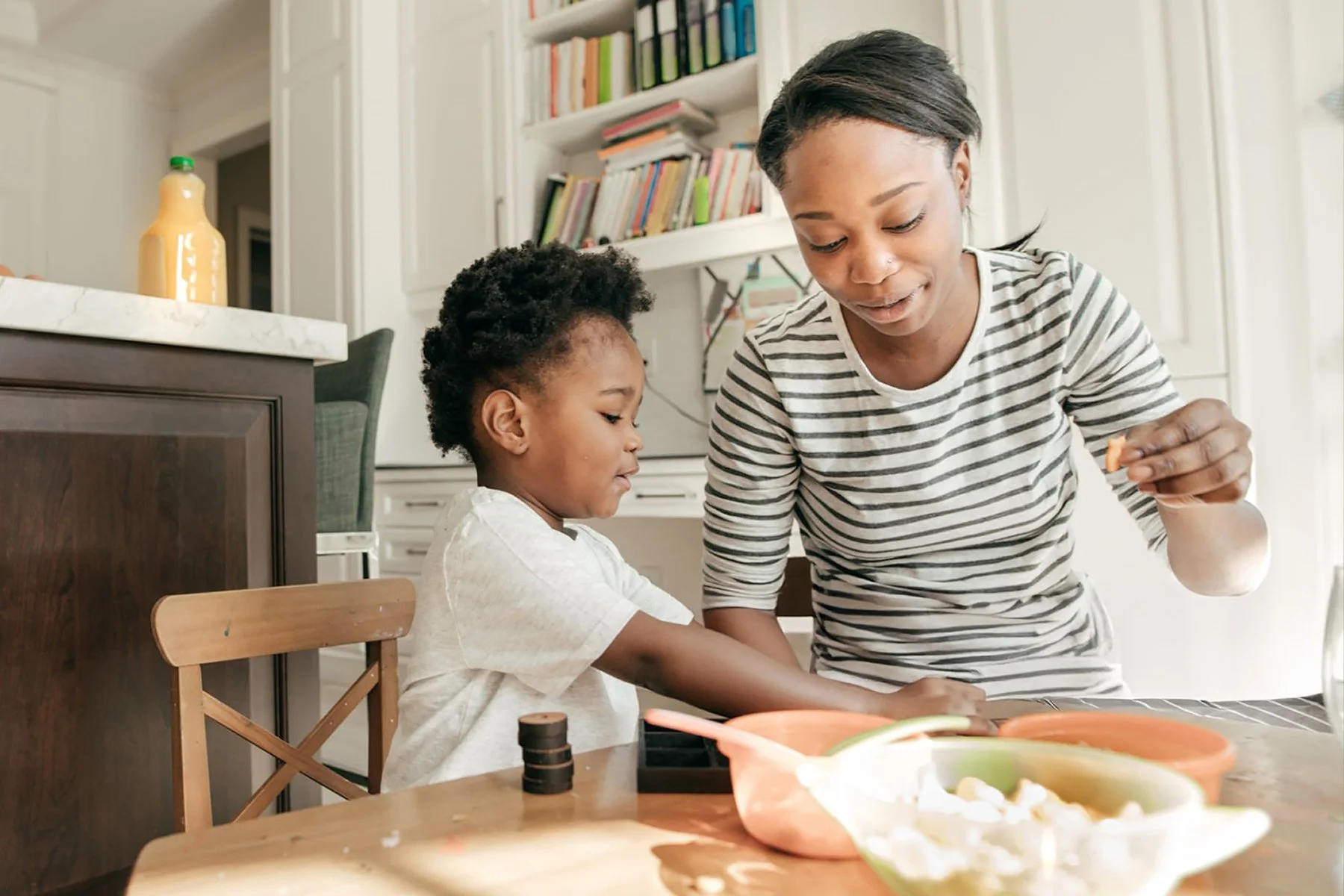
Everyday tasks can become moments of learning and connection. Involve your child in watering plants, folding towels, preparing snacks, or setting the table. Consider storing plates, cups, and silverware in a low cabinet so your child can set the table independently. These simple activities build fine motor skills, concentration, and a deep sense of contribution to family life.
Making the Home Accessible
A Montessori home is designed with the child in mind. Add a step stool in the kitchen so your child can reach the counter to help cook. Install hooks at their height for coats and backpacks, and use labeled bins for toys and materials. Accessibility communicates trust—it tells children, “You are capable.”
The Importance of Nature
Montessori education values time outdoors as essential to a child’s growth. Encourage exploration in your yard, local park, or even on a neighborhood walk. Collect leaves, observe insects, or simply sit and notice the sounds of birds and the rustling of trees. Time in nature promotes curiosity, peace, and appreciation for the world around them.
Continuing the Montessori Journey
When your home environment supports independence, your child experiences a seamless transition between school and home. Every time they choose their clothes, pour their own water, or notice a flower on a walk, they are practicing the same principles they learn in the classroom—respect, care, and joyful discovery.
Let’s work together to nurture capable, confident, and curious children—both in school and at home.
PARENT RESOURCES
Age Appropriate Chores List for Children
Flanders Family Home Life
10 Ways to Encourage Independence in Your Child at Home
Children’s House Montessori School of Reston